Kyle Petty Visits Musco in Oskaloosa, Shares Classic Daytona Story and Straight Talk on NASCAR Today
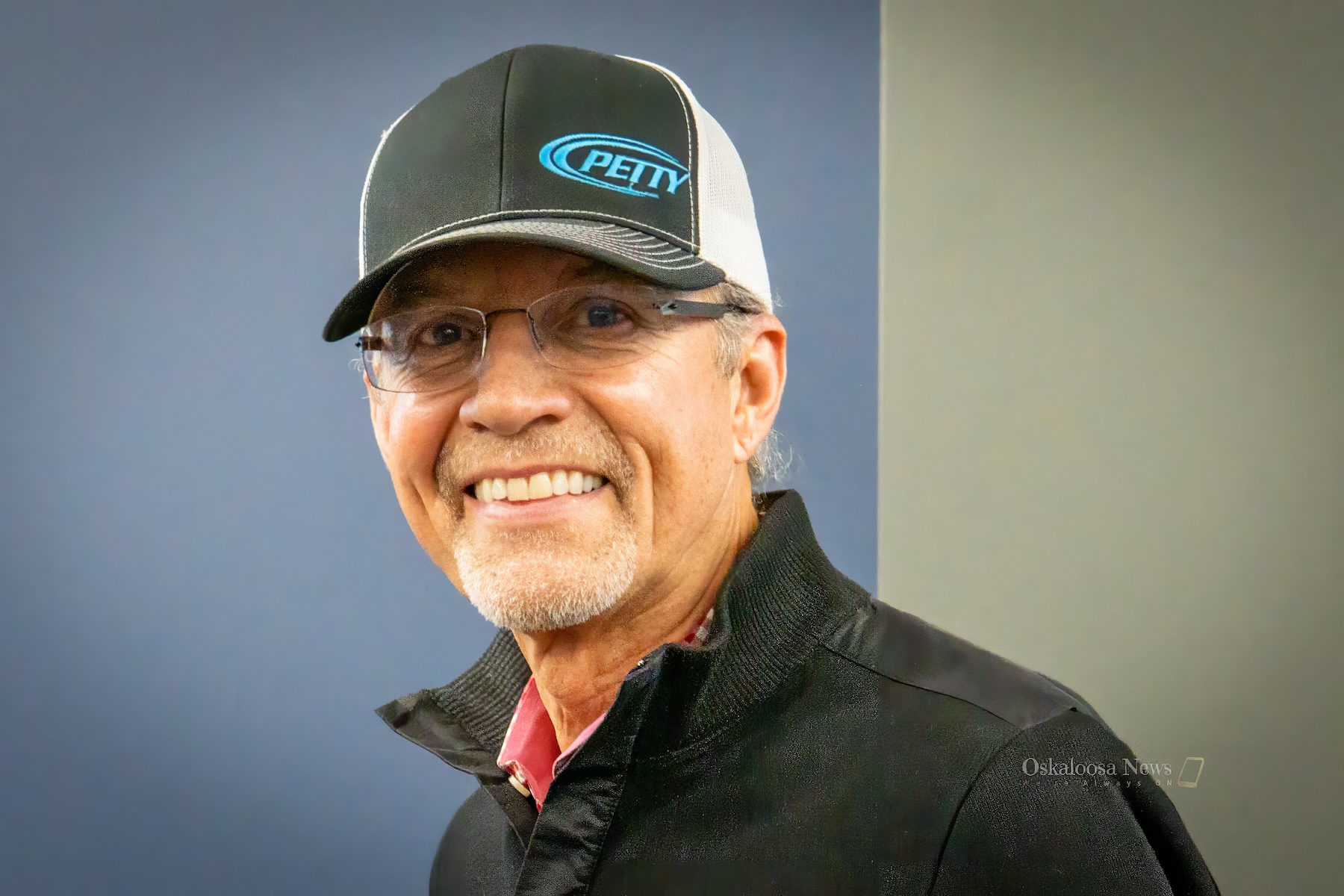
Kyle Petty during his visit to Musco in December of 2025.
OSKALOOSA — Kyle Petty came to Musco Lighting to help mark a new partnership tied to the 30th Anniversary Kyle Petty Charity Ride Across America, but his visit also turned into something NASCAR fans appreciate: a mix of racing history, behind-the-scenes insight, and blunt opinions about how the sport works now.
Petty was in Oskaloosa because Musco is joining the partner lineup for the 2026 charity ride that benefits Victory Junction, the year-round camp founded by the Petty family for children living with complex medical and physical conditions. For local readers, it was another reminder that Musco’s connections stretch far beyond Iowa—into major sports venues, major events, and even the racing world Petty grew up in.
During his remarks, Petty repeatedly returned to a simple idea: NASCAR has changed, but the debates fans argue about today—rules, fairness, and who controls the sport—have been part of NASCAR since the beginning.
A Daytona Finish That Took Days to Settle
When Petty talks NASCAR history, it usually comes with a story. One of the biggest he shared was about the 1959 Daytona 500 finish, a race that became famous for its confusion, its protest, and the time it took to get a final answer.
Petty described how Iowa driver Johnny Beauchamp was initially treated like the winner.
“Johnny gets the check. Johnny gets the trophy. Johnny gets everything,” Petty said.
But Petty said his grandfather, Lee Petty, believed he had actually won—and he filed a protest.
“My grandfather is escorted away by two gentlemen wearing badges and carrying guns, and my grandfather protests,” Petty said.
In the modern era, a finish like that would be settled quickly with video and electronic scoring. In 1959, Petty said it took days because officials needed photographs developed to confirm what happened at the line. Petty described his grandfather staying put and repeatedly calling to see if the proof was ready.
“He’d say, Have you got that picture yet? And they would say, not yet,” Petty recalled.
For longtime fans, it’s the kind of story that explains why NASCAR has always carried a certain edge. Even the biggest races could come down to a protest, a photo, and a wait. Petty’s point wasn’t just to entertain. It was to show that NASCAR has always operated in a world where rules and outcomes are argued, tested, and sometimes disputed—especially when the stakes are high.
The Championship Debate: Points, Playoffs, and Knowing the Rules
After the history, Petty shifted to the argument NASCAR fans have every season: the point system and the playoff format.
Petty’s view is that fans and competitors can dislike the system, but it is still the system everyone agrees to at the start of the year.
“When they go to Daytona for the first race, you know what the point system is?” Petty said. “You don’t like it. You don’t have to race. Don’t show up.”
He used the same logic with other sports.
“When you start a baseball game, you know what the rules are?” Petty said. “You don’t like them. Go play another sport.”
That doesn’t mean Petty thinks every format is perfect. He explained that he personally prefers a season-long points championship—but only if it is structured to reward winning and top-level performance.
“I personally like a year long point system, okay, but the year long point system has to be tempered…” Petty said.
Petty’s criticism was aimed at systems that reward “good enough” results without strongly rewarding winning. His comparison landed the way racing fans talk in garages and grandstands—direct and a little sharp.
“There’s a reason they don’t give Miss America… to Miss Congeniality. Okay? She’s nice. Yeah,” Petty said.
In plain terms, Petty’s view is that a championship should not feel like it was won simply by avoiding mistakes. He wants a system where victories and elite performance matter, because that is what racing is supposed to measure.
How NASCAR Is Different From Other Major Sports
Petty also addressed a part of NASCAR that many fans know exists, but don’t always hear explained clearly: NASCAR’s business structure, and why that structure affects everything.
“NASCAR is a privately held company by one family,” Petty said.
Then he described how teams fit into that structure.
“We have always raced as independent contractors. Every team is an independent contractor,” Petty said.
That distinction matters because it helps explain why NASCAR disputes can feel different from labor and business disputes in other sports. NASCAR is not a league made up of equal partners in the way some fans imagine. Petty framed it in simple language that left little room for confusion.
“It’s their rules. It’s their ball. It’s their ballpark,” Petty said.
Petty’s larger message was that fans often focus on what they see—cars, tracks, rules packages—but many of the biggest disagreements around NASCAR are about power, control, and money behind the scenes.
A Local Stop With National Meaning
While Petty’s remarks covered NASCAR’s past and present, the reason he was at Musco was rooted in something beyond racing: the charity ride and Victory Junction.
Musco’s partnership with the Kyle Petty Charity Ride Across America connects Oskaloosa to a national fundraising effort that has brought riders together for decades. For Musco, it also fits the company’s long-running presence in sports facilities and event lighting, including strong ties to racing venues and major sporting events.
For local readers, Petty’s visit was both a community moment and a reminder of Musco’s national reach. For NASCAR fans, it was something else: a chance to hear a Petty talk about the sport the way fans actually talk about it—through stories, through blunt comparisons, and through the belief that winning and excellence should still be at the center of what NASCAR rewards.
Petty also came in second place the evening that Musco transformed the 1992 NASCAR Winston All-Star Race at Charlotte Motor Speedway into a night race. That race has become known as ‘One Hot Night’, and helped Musco make it’s mark in the motorsports world.
And for one day in Oskaloosa, those two audiences overlapped in a way that felt natural: a hometown company hosting a racing name, discussing a charity mission, and reminding everyone that NASCAR’s biggest arguments have been around since the sport’s earliest days.
Another strong connection to the charity ride is Kelderman Manufacturing, and Jeff Kelderman, who hosted the ride back in 2024.