Vander Linden Capitol News Update 2/23/12
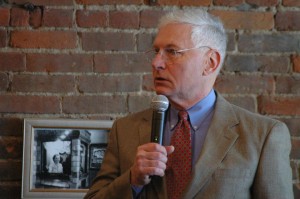
Guy Vander Linden (R-Oskaloosa)
House Approves Senate Changes the Prison Supplemental Bill
On Tuesday, the House approved Senate File 2071, the FY 12 supplemental appropriations bill.
When the Senate initially approved the bill, $8.5 million was appropriated to the Department of Corrections. The bill also created a third round of funding available from the Mental Health Risk Pool ($5.0 million). The Senate approved the bill on February 1 on a 26-23 party-line vote.
The House approved the bill for the first time on February 15 on a 96-0 vote. The House reduced the supplemental to the Governor’s recommendation of $6.5 million and off-set the appropriation by reducing the appropriation for Medicaid by $6.5 million. The House also changed the risk pool language to only allow for the first two tiers of counties to be eligible for the additional mental health funding.
On Monday, February 20, the Senate approved the bill for a second time. The House agreed to add $1 million for prisons and CBCs, which went to the following institutions as follows:
• Rockwell City Prison — $86,998 Clarinda Prison — $187,387
• Mitchellville Prison — $216,965 Fort Dodge Prison — $196,961
• CBC District 2 — $130,853 CBC District 4 — $25,498
• CBC District 5 — $155,338
In addition, the Senate appropriated $7.2 million from the Economic Emergency Fund (EEF) to restore the standing appropriation to the Property Tax Relief fund for mental health services. This is needed to prevent a $7.2 million property tax increase due to approving a two-year budget last session.
Finally, the Senate amendment removes the provision that county MHMRDD committees are not required to submit a three-year strategic plan by April 1, 2012 to DHS, since the Legislature is in the process of overhauling state mental health services.
House Republicans Continue the Fight Against Deadly Synthetic Drugs
Last year, House Republicans worked hard to ban K2, salvia divinorum and bath salts, despite protests of both Senate and House Democrats. Unfortunately, the K2 drug battle is not over. Three Des Moines area high school students were hospitalized recently after smoking synthetic marijuana (K2). The state crime lab is currently evaluating the substance to determine if it is on the list of banned chemicals or if this is a new and just as dangerous form of the drug.
Those who use K2 have reported many of the following symptoms; vomiting, seizures, increased agitation, lack of pain response uncontrolled/spastic body movements and elevated blood pressure, heart rate, and palpitations. Countless people have been sent to the hospital after smoking various forms of synthetic drugs and some have even died.
While the ban that passed last year has been effective, there is more work to be done to protect Iowans from such dangerous and sometimes deadly, synthetic drugs.
HSB 609 is currently in the House Public Safety Committee and is designed to combat the fast-changing chemicals used in these drugs. The study bill addresses the chemical mixes that K2 producers have been using to skirt the current state law. Several groups have worked to ensure this bill puts Iowa on the forefront of the K2 and synthetic drug fight.
Expanding the list of banned synthetic drugs and informing parents and students of their extreme danger is essential to protect those exposed to its sale and use.
Supreme Court Hears Oral Arguments on Item-Veto Case
On Tuesday, the Supreme Court of Iowa heard oral arguments on the lawsuit that AFSCME and a number of Democrat Representatives and Senators brought against Governor Branstad’s use of the item-veto for Senate File 517, the Economic Development Appropriation Bill from last year.
At issue were the Governor’s item-vetoes of three portions of the bill. Two of those provisions related to Workforce Development Field Offices and the other was related to a restriction of funds in administering a National Career Readiness Certificate (NCRC) Program.
The Supreme Court heard oral arguments at 7 p.m., an unusual night session, to allow for legislators and others in the interested public to attend. The reason that the Supreme Court is hearing the case is because of a decision issued by the Polk County District Court last fall. The Court ruled against the Governor on the two questions involving the Field Offices and in favor of the Governor in the question of the NCRC program. The Court found that both of the field office-related paragraphs were conditions of the appropriation (and thus unable to be vetoed without vetoing the appropriation as well) rather than ‘riders’ (which may be independently vetoed without a veto of the appropriation to which it is attached).
The item-vetoes have remained in effect as the Governor’s office requested and was granted a stay of the original decision until the Supreme Court could hear the case.
In the brief to the Supreme Court presented by Governor Branstad, the appellants argue that the issue revolves around the fact that a 1971 Supreme Court decision, Turner v. Iowa State Highway Commission, left it clear that the legislature cannot combine an appropriation provision and a policy provision into a single ‘item,’ unless the legislature expressly states its intent to do so by including language conditioning or limiting the appropriation. The plaintiffs argue that the pieces vetoed were conditions of the appropriation, and not separate items within the bill. This is the lynchpin of the decision as if something is a condition, it may not be vetoed without also vetoing the related appropriation. However, if the item is not a condition of the appropriation and is merely a separate item, as Governor Branstad argues, then the item-veto would be appropriate.
The Supreme Court is expected to issue its ruling later this year.