

Oskaloosa Franchise Fee’s On Utilities Bring Questions From Business Owners
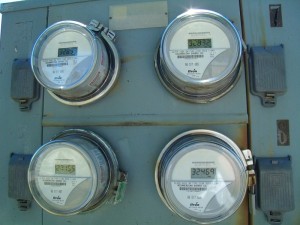
How much will your utility bill go up under a planned franchise fee hike by the city?
Oskaloosa, Iowa – The Oskaloosa City Council held a work session before the scheduled City Council meeting Tuesday night to further discuss franchise fees that would be applied to utilities bills, in an attempt to generate funds for road repairs within Oskaloosa.
The first reading of the new fees passed the Oskaloosa City Council at the last scheduled meeting which then drew the attention of local business owners who became concerned about how this would impact their ability to compete.
City Manager Michael Schrock and Council Members expressed that that type of discussion occurring during the work session was something that they were looking for. “What are the numbers, what are our needs in infrastructure, how do we get there?” Schrock asked during Tuesday nights meeting.
The council agreed to form a committee between themselves and business owners, in order to help find a solution that would be equitable for all parties involved.
I spoke with Blair Van Zetten after the meeting and asked him about this issue that has come to light. “It’s turned into an interesting issue, mainly because of the amount of money of this tax. Instead of putting it on the property taxes, everybody’s complained property taxes are to high, so now it’s going to go on your utility bill. The problem is that you know what the property taxes are. Weather effects your utility bill; that, you have no control.”
Van Zetten continued,”It’s become a big issue because, for a lot of business users such as CLOW, Quad County, or us [Oskaloosa Food Products], we’re large users of natural gas, large users of electricity, and so our bills would be a pretty substantial increase. The year they are using [for pricing], 2010, but back in 2005 we had triple the gas rates we have right now, gas being a commodity.”
So with the proposed increase from the current rate of .2% to the possibility of 5%, that increase can make it more difficult for local businesses to be competitive. It also impacts whether other businesses consider moving into the area. Currently, if a resident is paying 20 cents per 100 dollars, that will be increased to 5 dollars per 100 dollars. So that bill that use to cost you $100.20 would jump to $105.00, with the fee increase. Since the fee wouldn’t be flat, if gas rates were to increase 30% because of the volatility of gas, your bill would then be $136.50.
I next asked Van Zetten if this would make doing business more difficult because of how this would cut into the margin. Van Zetten’s response was, “You’re exactly right, and you’ll never bring a business in because any business that’s a big user of power is going to look at those fees and want some kind of compensation for that.”
Van Zetten believes that businesses will start looking at other towns “and seeing what the utility rates are and see what it is”.
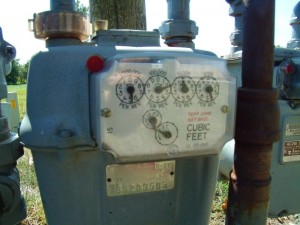
Oskaloosa's current franchise fee is .2%. Under the proposed plan, that could be 5% for residential customers very soon.
I spoke with Oskaloosa City Manager Michael Schrock on why the vote on the franchise fees was continued to the next city council meeting, and didn’t have it’s second reading Tuesday evening.
Schrock stated, “The intent all along was the discussion of the franchise fee, its complicated because we’re trying to get, we’re trying to identify a resource that can help us pay for road improvements in our community. You have certain options to do that and whether that be through franchise fee increase, which can been seen as another way of taxing or raising property taxes or using the local option sales tax. Those are the real primary way of paying for that.”
Schrock continued, “So what we’ve done is put an item on the agenda a month ago and here’s what the franchise fee could be. Here’s the maximum rate, and hoping we would get some input from people. I know I’d asked the city council if they’d heard anything. They hadn’t received anything. Talked with the business community and there really wasn’t much of a reaction and so that item had passed.”
Schrock continued,”Well after it had passed, the story had run that it’d passed on the first reading. Then we started hearing more from the business leaders and the impact that increase would have on them and their concern about how just exactly how would it impact the community.” Schrock continued by saying, “So in our work session tonight, we had a representative from the manufacturing industry sector come to us and asked to have further discussion with the city council. Have a discussion with the business leaders, see if there’s more to this they can understand and give their input and council tonight [Tuesday] agreed to do that. They continued the items so they’ve delayed for another meeting. It still has to go through the three total readings , but they delayed it so we can have this conversation with the business community.”
Over an extended period of time, property taxes continue to go up, and people wonder where their dollars are going as their assessed values continue to climb which equals more dollars for government, why does the government continue to increase taxes? was a question I posed to Schrock.
“I think inflation always eats into any operation whether its government or private sector business, that some of the issues that we’re facing with taxation over years,” Schrock said about the increase in taxation. “If you look at what people pay in their property tax and you break it out, the primary property tax which is an 8-10 levy that pays for administration of the city, pays for the salary of the finance department. It pays for police. It pays for fire. It pays for aquatic center [library]. That’s what it pays for, so that’s the majority of your property tax for those things. We have utility fees. Those are outside the property tax, which pays for sewer, for water. So really what your paying for is employee salaries and the supplies and services. We have the road use tax fund, which is paid off by your registration fee, gasoline tax. That pays for our street department”.
Schrock explained about how funds are generated for road repairs. “Your property taxes don’t pay for roads unless we issue debt strictly related to road improvements. The last time we did that was for downtown street improvements and then some of the property owners paid us back, paid the city back, all the property tax payers, through assessments. So when you look at your property tax as it stands right now, some of that is because of old debt that was issued to pay for roads, but we haven’t really issued new debt to pay for roads, but overall there’s not a lot of extra money that’s there to pay for roads. So road money comes from road use tax.”
I asked the City Manager, when people compare Oskaloosa to other towns, they wonder why Oskaloosa has such terrible roads in comparison to others towns around us. An example would be Grinnell.
“I don’t know what their assessed value is. I don’t know. With the private university they probably have a little bit higher [assessed value]. It could be they’ve had a road maintenance plan in place for many years. It’s possible that they do, you know, what their property tax rate is cause I’m sure if you look at the property tax rate, it probably reflects that they’ve borrowed over time continuously to pay for roads,” explained Schrock his thoughts on the subject.








[…] City was contacted by local business owners who were concerned about this fee increase. The Council recently held a work session with local business owners to discuss this […]