As U.S. Catholic conversions grow, experts point to multiple drivers
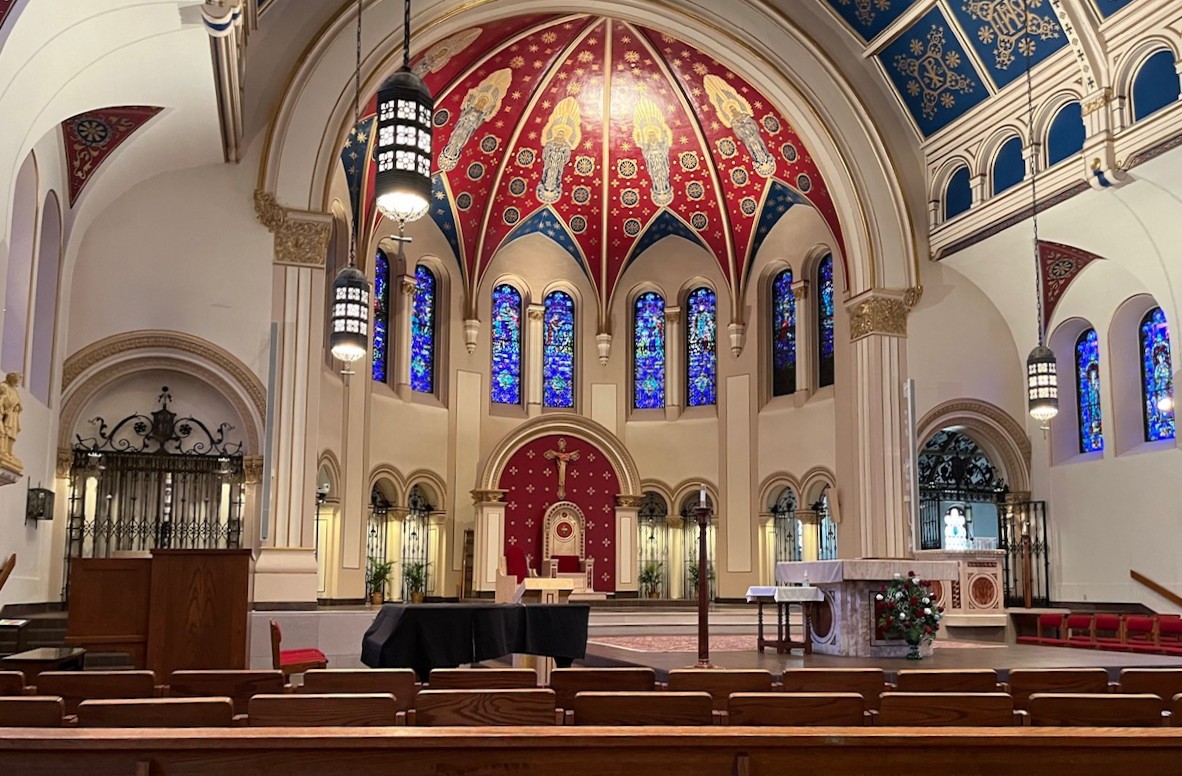
The Diocese of Des Moines saw 400 people join the Catholic Church this Easter as conversions to the religion grow. Shown here is St. Ambrose Cathedral in Des Moines. (Photo by Kathie Obradovich/Iowa Capital Dispatch)
by Brooklyn Draisey, Iowa Capital Dispatch
April 8, 2026
Catholic churches and organizations across Iowa and the U.S. are seeing rising numbers of converts to the religion, scholars and officials say, in part due to the digital age and renewed searching for community and meaning.
The Diocese of Des Moines, which spans 80 parishes in central and southwest Iowa, had 400 people officially join the Catholic Church on Easter Sunday, a jump of just over 50% from last year. Adult Evangelization and Leadership Formation Team Director John Gaffney said he doesn’t have specific numbers for how other dioceses fared this year, but he’s heard from colleagues across the U.S. that they are seeing larger numbers of people join them.
“There are many more young adults, especially, seeking churches that have rituals,” Gaffney said. “So it’s not only the Roman Catholic church that has seen bumps, but our more orthodox Catholics, like the Greek Orthodox, the Byzantine church, even Judaism, have seen more people coming into their faith traditions.”
In his 16 years with the Diocese of Des Moines, Gaffney said there’s been an “ebb and flow” of years where many or fewer people join the church. Rates remained fairly steady overall until the COVID-19 pandemic began, which he said “threw the church as well as the world out of sync.”
This led to a dearth of both young people and adults who had previously “missed sacraments,” Gaffney said, meaning they had not completed either a baptism, confirmation or communion ceremony in the church. There was a boost in numbers in 2024 from the need to play catch-up from the pandemic, and over the past year another increase has been seen, though Gaffney said this one “seems to be a lot different.”
Kristy Nabhan-Warren, University of Iowa associate vice president for research and religious studies professor, said she’s heard the same thing, that churches seeing the highest rates of attendance are those with a “strong sense of tradition — capital T,” and that young people are part of the driving force behind conversions. However, Nabhan-Warren said there isn’t just any one cause of rising rates of conversion to the Roman Catholic, or any other, church.
Digital impacts on religious beliefs
In addition to her work at the UI, Nabhan-Warren is president-elect of the American Catholic Historical Association. Both she and Gaffney pointed to the advance of technology in everyday life as something pushing people’s interest in the religion, though the feelings related to that technology can vary wildly.
Catholic podcasters, Youtubers and other influencers, as well as apps, have helped people discover and connect with the Catholic Church, Gaffney said, and while “cutting away from the noise of all these devices” is a reason he’s seen for interest in the church, he believes the relationship is more of a “both/and” situation rather than an “either/or” one.
People have learned to live with programs like artificial intelligence and social media, Nabhan-Warren said, but she believes that some are “becoming exhausted” with the technology and want to find a place where they can gather with other humans and be part of a community. The beauty of the space where they come together also adds to the appeal, she said.
“I think because of everything going on in our world — war, AI, the economy is starting to show signs of distress — I think that the church is going to continue to be a place of refuge for people,” Nabhan-Warren said.
Pope Leo XIV draws interest
Catholicism’s highest leader, appointed last year, has also been a generator of interest in the religion, the experts said, both for where he’s from and what he’s saying.
Robert Francis Prevost, a Chicago native who became Pope Leo XIV in August 2025, is the 267th pope of the Catholic Church and the first American in the position. When Gaffney’s wife heard the news of his selection, he said she cried, as she never thought she’d see an American pope.
Pope Leo hasn’t “moved terribly far away” from popes that came before him in terms of his views and shared beliefs, but the fact that he is American has generated much interest in him, and by extension, his religion.
His American upbringing might not be leading to actual conversions though, Nabhan-Warren said. Pope Leo’s comments on over-reliance on technology, AI’s impact on people, and that religion does not justify war are affirming beliefs many people have, she said, and he is reaching them from the pulpit.
“I think his views are what’s driving (interest),” she said, “less his identity and more what he’s saying.”
Gaffney said he’ll be interested to look back in 10 years and see how these trends in conversion continue and how much of an impact Pope Leo has on the American Catholic population, some of whom connect their religious and political beliefs to one another.
With more people entering the Catholic Church, neither Nabhan-Warren or Gaffney were worried about the community’s capacity or willingness to welcome whoever shows up.
For those already involved in their church, Gaffney said they should be open to the changes newcomers will bring to their community. He said it is a “beautiful opportunity” to welcome new members of the “family.”
“The ritual, the teachings remain the same, but it is the people that are the church within this parish community,” Gaffney said. “So what is the great gift of people coming into the church, and especially for those who’ve been Catholic for a long time … how is their faith renewed because of this surge?”
Iowa Capital Dispatch is part of States Newsroom, a nonprofit news network supported by grants and a coalition of donors as a 501c(3) public charity. Iowa Capital Dispatch maintains editorial independence. Contact Editor Kathie Obradovich for questions: info@iowacapitaldispatch.com.