School Board Hears Updated Policy For Homeless Students
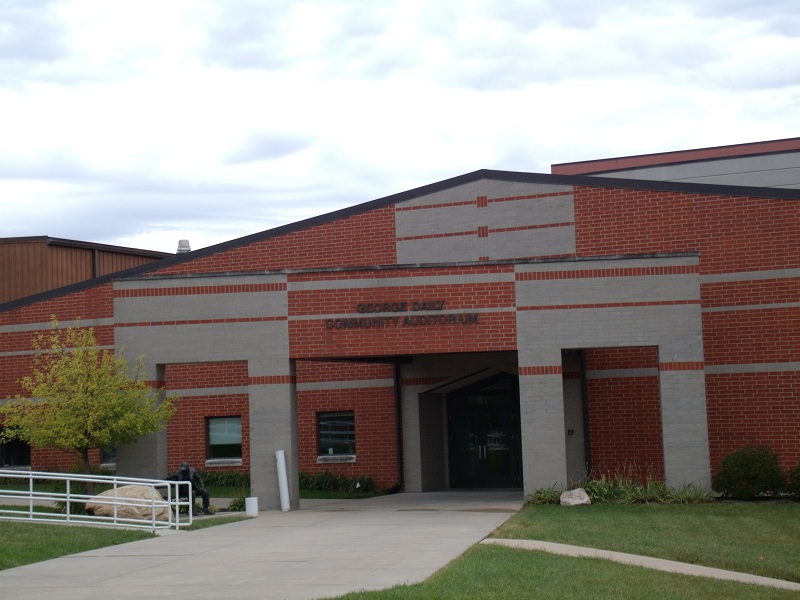
Oskaloosa Community School Administration
Oskaloosa, Iowa – The Oskaloosa School Board, with Tom Richardson at the helm began Tuesday nights session looking at 27 agenda items.
Oskaloosa School Superintendent Russ Reiter spoke about the policy and the fact that the district does currently work with homeless students. The conversation also included the policy for assistance available to those students.
Janet Johnson, elementary school counselor, and the liaison to the district in regards to the homeless student policy, spoke before the school board to talk about the updates to the policy.
Johnson helps to keep track of the numbers of how many homeless students live in the district, with the assistance of counselors at the middle school and high school. Johnson works then with the State of Iowa to help find resources when homeless student situations arise.
The update to the policy is being implemented to further align the district’s policy with that of the state.
One of the first changes came in the ages reported by the district to the state. The previous age range was for students between the ages of 5 and 21. The updated policy is now covering students from the age of 3 to 21 years of age. “So it covers preschool children too,” said Johnson.
“It made the definition of homeless a little more detailed and specific,” said Johnson. The definition made inclusions for those children who run away or are forced out of a home.
According to the Iowa Department of Education, “In the wake of tough economic times, schools are seeing a rise of homeless youth, and many schools have raised the question of who is considered to be a “homeless youth”.
The definition of the term “homeless children and youth” is as follows:
A. Means individuals who lack a fixed, regular, and adequate nighttime residence; and
B. Includes the following:
I. Children and youths who are sharing the housing of other persons due to loss of housing, economic hardship, or similar reason; are living in motels, hotels, trailer parks, or camping grounds due to a lack of alternative accommodations; are living in emergency or transitional shelters; or awaiting foster care placement;
II. Children and youths who have a primary nighttime residence that is public or private not designed for or ordinarily used as a regular sleeping accommodation for human beings;
III. Children and youths who are living in cars, parks, public spaces, abandoned buildings, substandard housing, bus or train stations, or similar settings; and
IV. Migratory children who qualify as homeless for the purpose of this subtitle because the children are living in circumstances described in clause (I) through (III).
Added to the above definition is to include youth who have run away or been forced to leave home.
Johnson said that the high school students may benefit the most from the last addition to the definition, as some students are facing homelessness situations after being kicked out by parents.
Also added to the new policy is a dispute resolution process that will allow a parent, not happy with the district’s decision, to appeal.
Board member Erik Edgren asked Johnson if there are instances of students living in a car, for example.
Johnson explained that there are some students that fit that description every year, who are living in a car, or tent. “I would say the vast majority of the homeless students we encounter are the ones who are doubled up.”
“Years ago, we wouldn’t have thought that was homeless,” said Johnson. “Doubled up is considered homeless now.”
Reiter took the time to thank staff that have gone the extra mile for those students who are homeless. He said he has known staff to take students to the grocery store, and pay for it out of their own pocket.
Those that are in need of assistance under the guidelines of the definition can talk with Johnson, about receiving the additional aid they may need during the transition, by contacting the district’s central office.