Carnivorous Plants Help Keep Pests From Your Summertime Patio
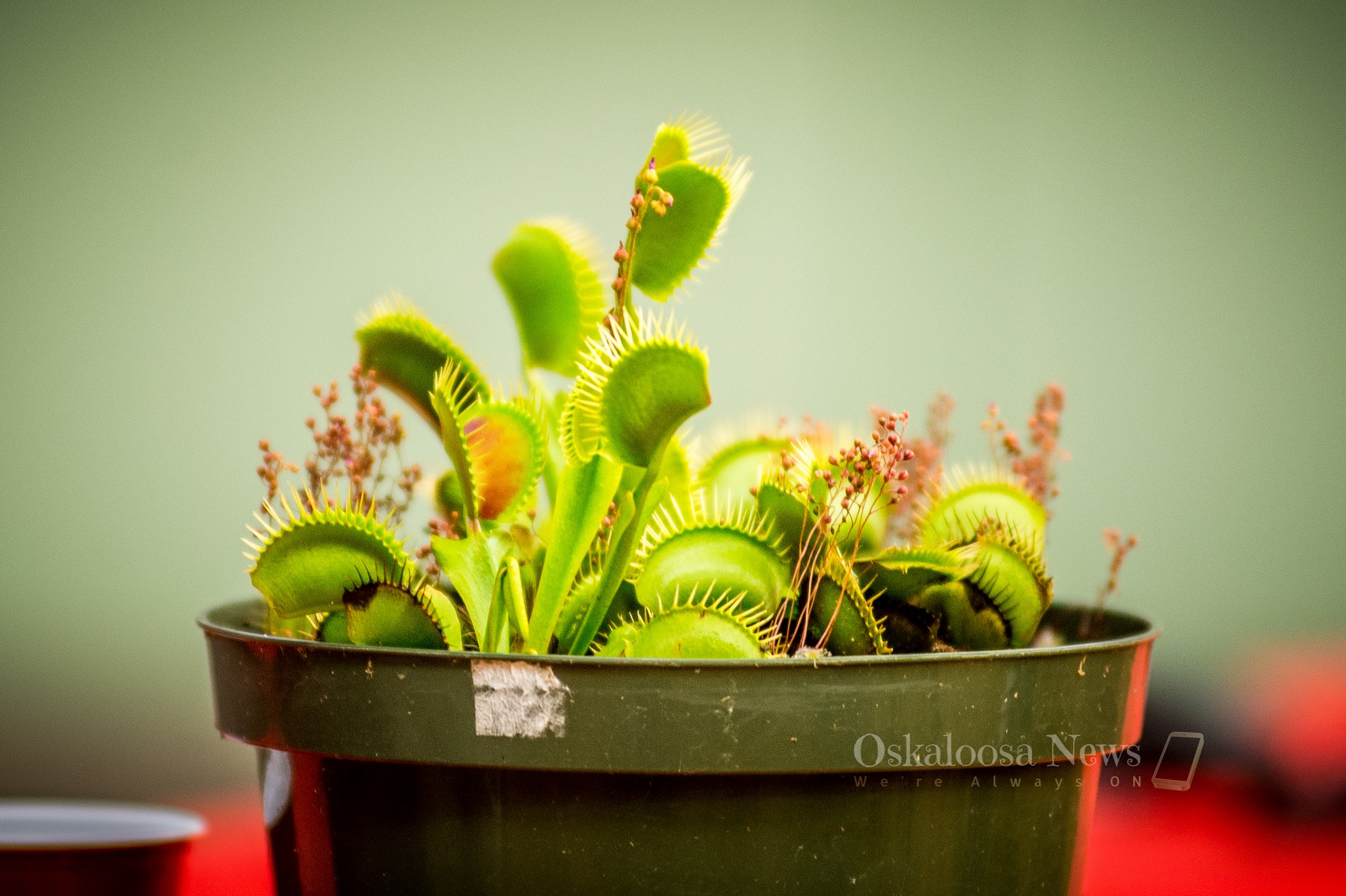
A Venus Fly Trap on display at the carnivorous plant presentation at the ISU Extension office this past week.
Oskaloosa, Iowa- Many of us have had a Venus Fly-Trap, marveling at how quickly it traps its victims. It’s not uncommon for those plants to wither and die within a short time frame.
Keith Becker was at the ISU Extension Office Tuesday evening to talk about carnivorous plants, and how to care for those plants long term.
Carnivorous plants like the Venus Fly Trap don’t get their nutrients from the soil, but instead rely solely on the insects they catch to maintain and grow themselves.
Becker said that ideally, you want to grow your carnivorous plants outdoors during all seasons, except for winter. The plant will feed itself that way. “They’ll kind of get on a schedule to where every time there’s a trap open; they get a pretty good shot of getting something.”
“If you do have to keep it indoors, I would say probably once a month,” says Becker of feeding the plant.
Becker says he’s always been a horticulturalist and has always been into growing plants. “I went through an orchid phase.”
“My orchids started growing fungus gnats, and they have pests just kind of coming out of the soil. I figured there’s gotta be something that would eat that,” explained Becker of where his interest in carnivorous plants started.
Becker started looking at sundew and butterwort plants initially. “After I learned about them, and saw them, I was kind of engrossed. My orchid collection quickly disappeared, and it turned into a carnivorous plant collection.”
During Becker’s presentations, one of the most common questions is how to keep their carnivorous plants alive. “They follow a different set of rules than everything we’re used to in horticulture.”
You can learn more about carnivorous plants by visiting https://www.carnivorousplants.org/