Miller-Meeks says her health care bill would address ‘root causes’ of high premiums
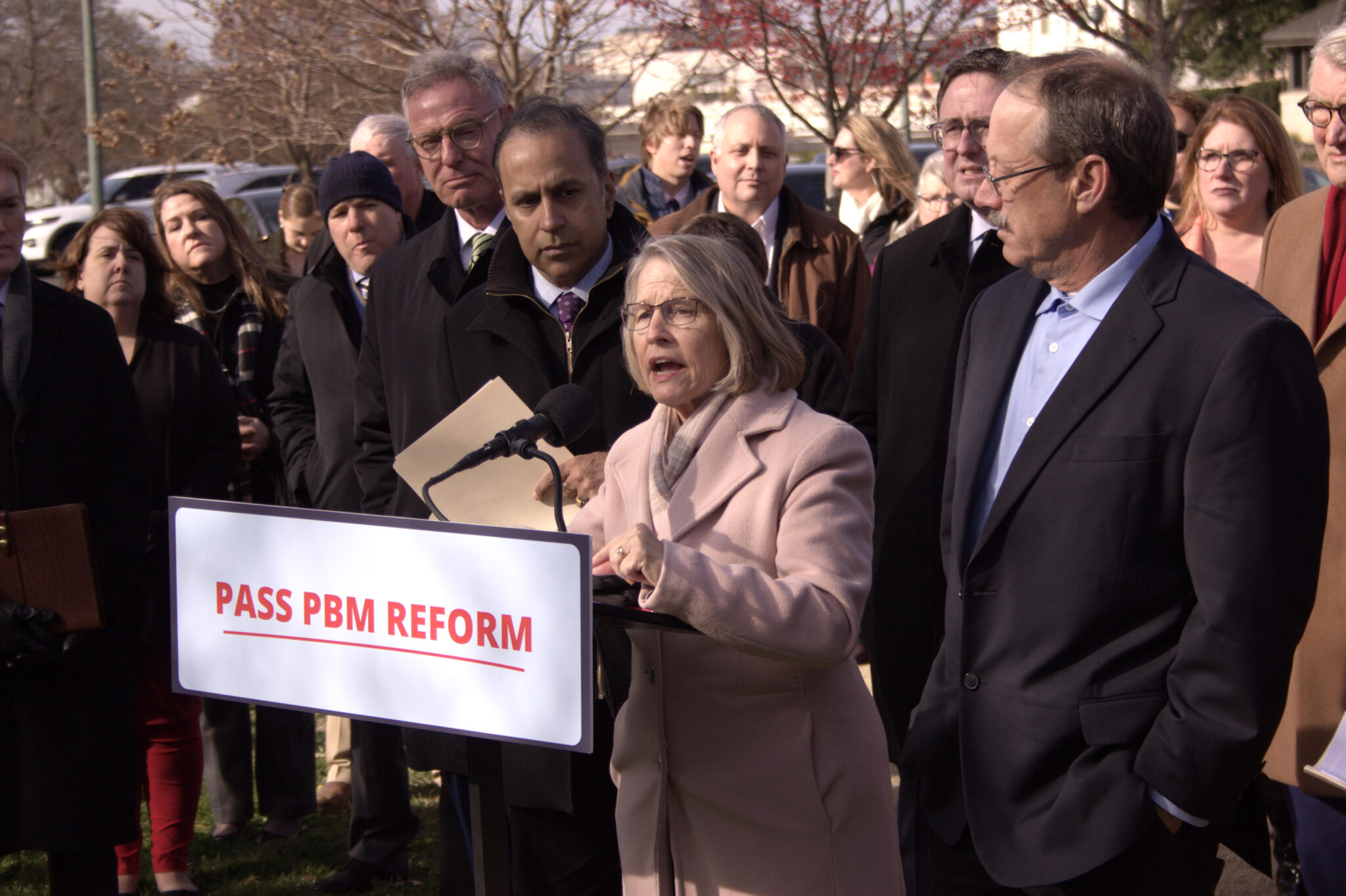
U.S. Rep. Mariannette Miller-Meeks, R-Iowa, spoke at a news conference in Washington D.C., Dec. 3, 2024, calling for regulating financial practices of pharmacy benefit managers. (Photo courtesy of Miller-Meeks’ office)
by Robin Opsahl, Iowa Capital Dispatch
December 15, 2025
U.S. Rep. Mariannette Miller-Meeks said Monday the health care bill she is leading in the U.S. House would address the “root causes” behind rising health care premiums while not seeking to extend Affordable Care Act subsidies.
The “Lower Health Care Premiums for All Americans Act,” sponsored by Miller-Meeks, is House Republicans’ proposal to tackle rising health care costs amid growing concerns about the end of ACA enhanced tax credits at the end of the year.
Miller-Meeks said during a call with Iowa reporters that House Republicans’ proposal focuses on changes that “actually lower costs and put patients and their doctors back in charge, and back in the driver’s seat.”
The legislation contains multiple proposals that Miller-Meeks said would reduce premium costs, including providing funding for cost-sharing reduction payments under the ACA beginning in 2027. “Cost-sharing reductions” lower deductibles, copayments and out-of-pocket maximums for one of the ACA plans, depending on income. The bill also adds new requirements for pharmacy benefit managers (PBMs) to share information on prescription drug costs and other decisions.
Additionally, the legislation would allow more access to Association Health Plans, with Miller-Meeks saying the legislation would let more employers, including self-employed workers, “get the same benefits through the Obamacare that larger companies have.” It also makes changes to the definition of stop-loss insurance and codifies and makes changes to CHOICE rules that allow employers to offer defined contributions for employees purchasing their own health coverage plans.
“Simply put, this bill puts patients and their doctors over the profits of insurance companies,” Miller-Meeks said. “… We want to make (all) Americans — families and patients — the CEOs of their own health care decisions, in concert with their providers or their doctors. It’s smart, common-sense policy, it’s long overdue, and it’s the kind of health care reform that the American people have been waiting for, and actually gets at lowering premiums and lowering health care costs.”
Miller-Meeks points finger at Democrats for tax credit expiration
The ACA tax credits, created in 2021 and extended from the Inflation Reduction Act during the Biden administration, were the focus of the 43-day government shutdown as Senate Democrats sought to extend the subsidies again, warning health care premiums would spike if the expiration goes through.
The shutdown ended with no action taken on the issue. Two competing measures on lowering health care costs failed to advance last week in the Senate, as Democrats’ plan to extend the ACA tax credits as well as Republicans’ proposal to provide funding through Health Savings Accounts (HSAs) for some people who receive coverage through the ACA marketplace in 2026 and 2027 both failed to earn the 60 votes needed to advance.
Miller-Meeks and other Republicans who have argued against continuing the ACA subsidies said the tax credits are giving money to insurance companies using taxpayer dollars instead of finding means to decrease the costs of health coverage for consumers. She also said Monday that the enhanced premium tax credits were approved and extended without Republican support — and that the expiration date was also approved during those votes.
“So to say to Republicans, ‘We want you to do with a (small) majority what we could not do when we had all three branches of government,’ I think, is a little bit of hypocrisy and a little bit of shifting blame,” Miller-Meeks said. “They put the expiration date in it. … I can tell you, all Republicans agree on this — we want to lower health care costs for everyone, not just a select few, and we don’t want to continue to enrich profitable insurance companies.”
While Miller-Meeks said extending subsidies would mean giving money to insurance companies that “have no incentive to lower premiums because they’re getting a direct subsidy from the federal government,” she also said she does not “expect individuals to forgo health care that they need” as health care premiums are expected to rise in 2026 if the tax credits end.
While the measure does not address the expiration of ACA subsidies, she said the goal of the legislation is to provide longer-term decreases in premium costs.
“We’re trying to address the root causes, rather than should just gloss over and hide them and obscure the fact that premiums are going up,” Miller-Meeks said. “So we’re actually proactively working to reduce health costs for everyone, to get to those root causes that drive up costs. ”
She said the nonpartisan Congressional Budget Office “has scored that this will lower premiums, and lower premiums for half of the people in exchanges, as well as lower premiums for other individuals.”
Democrats say Miller-Meeks’ plan won’t stop cost increases
However, Democrats and other opponents say the measure would not effectively stop health care costs from rising as expected if subsidies end. Katie Smith, a spokesperson for the Democratic Congressional Campaign Committee, said the legislation is the latest action this year by Miller-Meeks that would hurt Iowans’ access to health care.
“Mariannette Miller-Meeks has spent her entire year attacking Iowans’ health care, from voting for the largest Medicaid cuts in history that will decimate rural hospitals, to opposing plans to prevent Iowans’ health care costs from skyrocketing,” Smith said in a statement. “Now, Miller-Meeks has made herself the face of Washington Republicans’ so-called ‘plan’ that does nothing to lower costs, and Iowans will hold her accountable for failing them next year.”
The measure faces difficult odds of making it to the President Donald Trump’s desk. Even if the measure passes in the House, it appears unlikely to clear the 60-vote threshold required in the Senate. Trump has also stated he continues to prefer a plan to give direct federal payments to Americans over Republican proposals making other changes.
Miller-Meeks said there are “bipartisan” components of the bill that she believes will gain traction with members of both parties.
“I think that it will get through the House, and I think it has an extremely good chance of getting through the Senate as well too,” Miller-Meek said. “As I said, Republicans are all focused on lowering health care costs for everyone. I do think we’ll have some Democrats join this bill as well.”
The House Rules Committee is scheduled to discuss the bill and possible amendments on Tuesday.
Iowa Capital Dispatch is part of States Newsroom, a nonprofit news network supported by grants and a coalition of donors as a 501c(3) public charity. Iowa Capital Dispatch maintains editorial independence. Contact Editor Kathie Obradovich for questions: info@iowacapitaldispatch.com.