Prisoner Of War Diary Holds Treasured Information
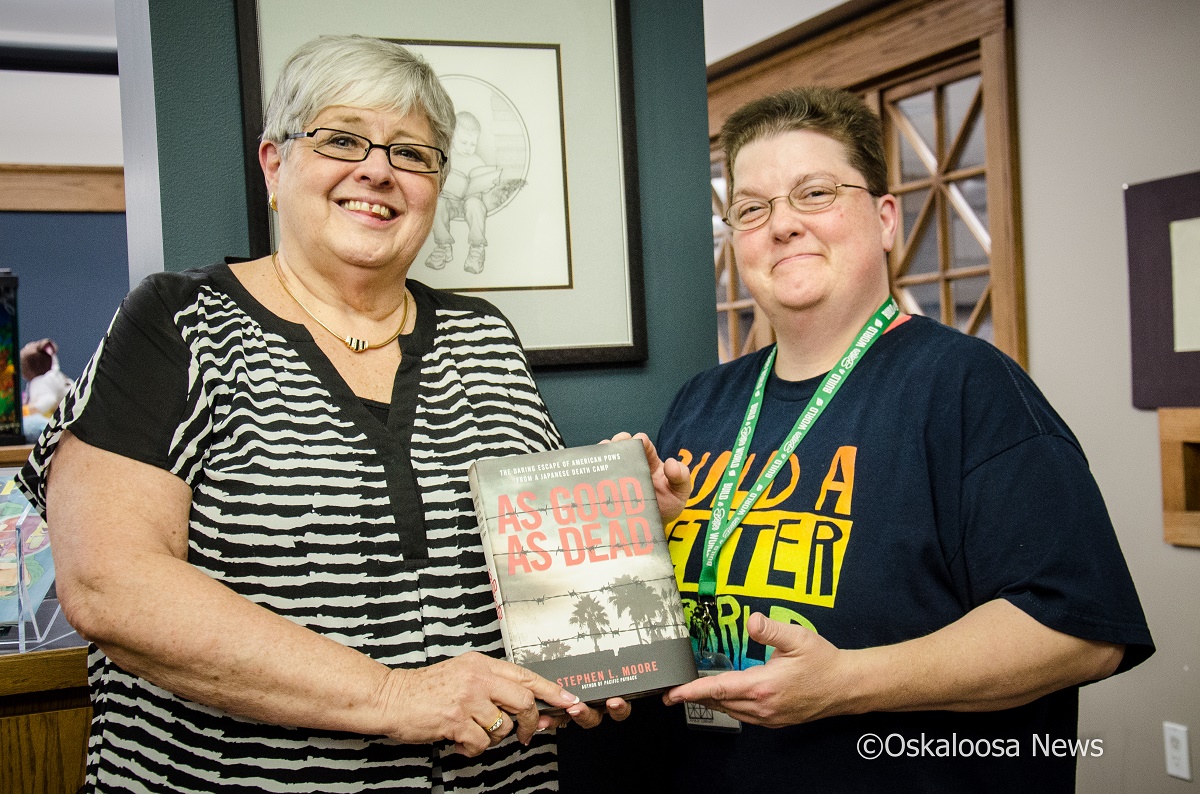
Lynhon Nanette Hough Stout presenting a copy of the book ‘As Good As Dead’ to Oskaloosa Library Director Marion Gaughan.
Oskaloosa, Iowa – Where with a greeting, a smile, and the passing over of a signed copy of a book, history was handed down to yet another generation of Oskaloosa readers.
The book – ‘As Good As Dead’ by Stephen L. Moore – describes the daring escape of American POWs from a Japanese Death Camp during World War II.
Lynhon Nanette Hough Stout presented a copy of the book to Oskaloosa Library Director Marion Gaughan in honor of her father Hubert Dwight Hough, who was one of the Americans depicted in the book.
The book bears the inscription, “To the Oskaloosa Public Library, in honor of Hubert Hough, who survived captivity on Palawa by working with the guerrilla network,” and is signed by Stephen Moore.
Hough was born in 1920. He entered the Navy in 1938, serving in China before being deployed on several ships and boats, according to the Personnel and Records departments of the Navy. Hough was captured in the Phillipines on May 8, 1942, after the Battle of Corregidor, and was part of the Bataan Death March.
Hough was imprisoned at Puerto Princesa on Palawan, and was part of the group that built runways for the Japanese. “I served as the clerk of the camp,” he wrote.
Hough was “really worked over” by his captors in Palawa during 1943, before being moved to Bilibid Prison Camp in Manila. The Bilibid prison is where 11 Americans escaped while prisoners were being executed on December 14, 1944.
The 150 prisoners had taken refuge in 3 covered trenches during an air raid by Allied forces trying to take back the Philippines.
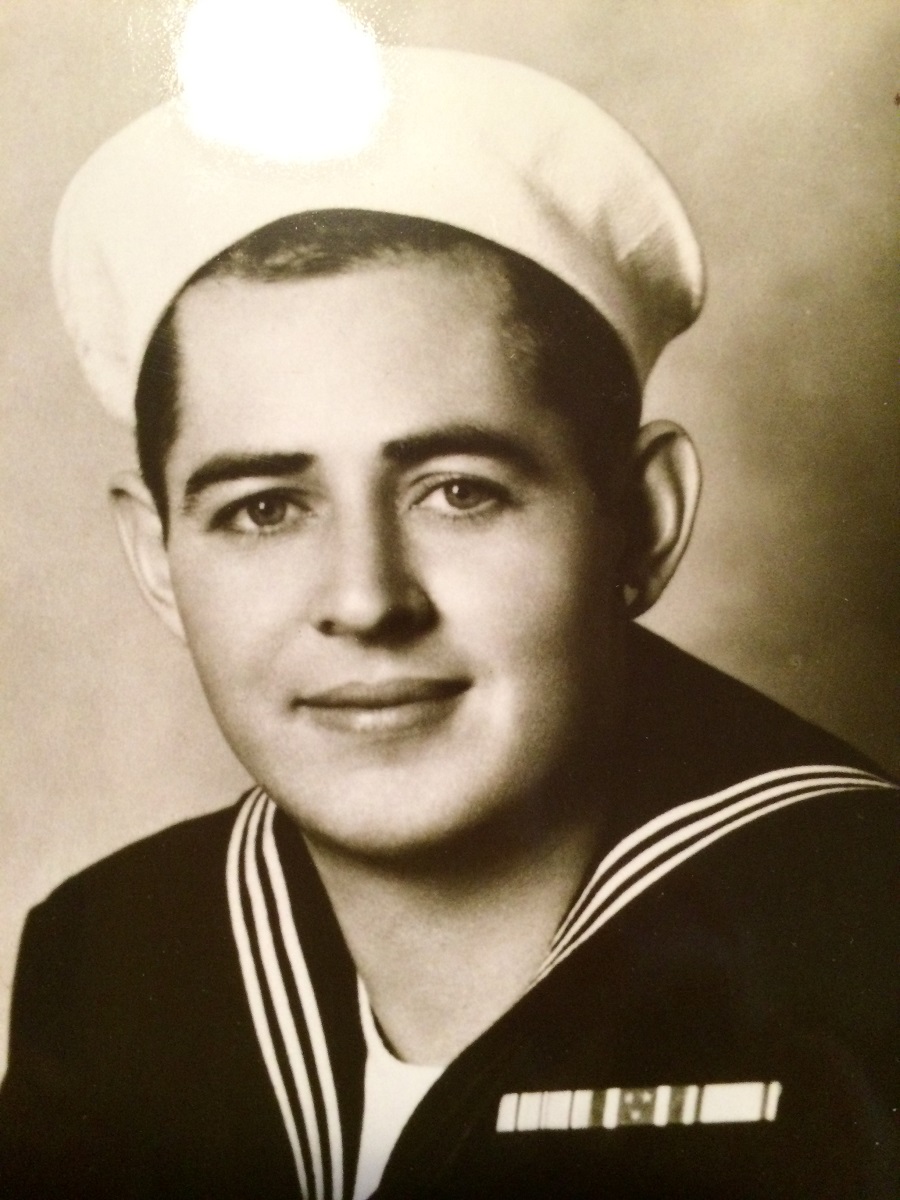
Hubert Hough
Their Japanese captors burned them alive in the trenches, and those attempting to escape the flames were cut down by machine gun fire. Up to 40 Americans escaped the initial carnage, after negotiating a barbed wire fence to access secret escape routes.
Some attempted to swim across the bay and were shot, while others hid in a small crack in the rocks near the beach. The Japanese searched the beach, killing most of the fugitives in hiding.
139 prisoners died in total.
Hough felt great responsibility for the deaths, as in his position as clerk he had created the list of men who were to stay at Bilibid, and identified those who would be transported to the Japanese mainland on September 17, 1944.
Hough was transported to Japan on the ‘Horror Ship of Maru Hachi,’ which carried sugar and tomatoes to Hong Kong. From there, he and the other POWs were taken to Takao, Formosa (now Kaohsiung, Taiwan).
Hough then endured a month-long ride to Port Moji, Japan, and was then placed on a train to Tokyo, Yokohama in February 1945.
On September 6, 1945, Hough was released, and was soon interviewed by Naval Intelligence, since he was one of the first POWs to be released.
Hough wrote, “I had a personal interview with President Truman when I got back to the states. He wanted first-hand information about the life of a POW – where I was a prisoner, how I felt, how I was liberated.”
Hough was discharged from the Navy on March 3, 1946 as Chief Yeoman, having completed 7 years, 7 months and 20 days of service.
On July 31, 1946, Hough received this request from the War Department to provide a statement of war crimes and atrocities. “It is believed that you may have been a victim, witness, or have knowledge of war crimes committed by the Japanese.”
Hough passed away in 1995, due in part to many physical problems stemming from his time in captivity.
Hough’s friends who served with him remember that he was mistreated by his captors, “Because he didn’t co-operate,” says Stout, describing how her father was badly beaten.
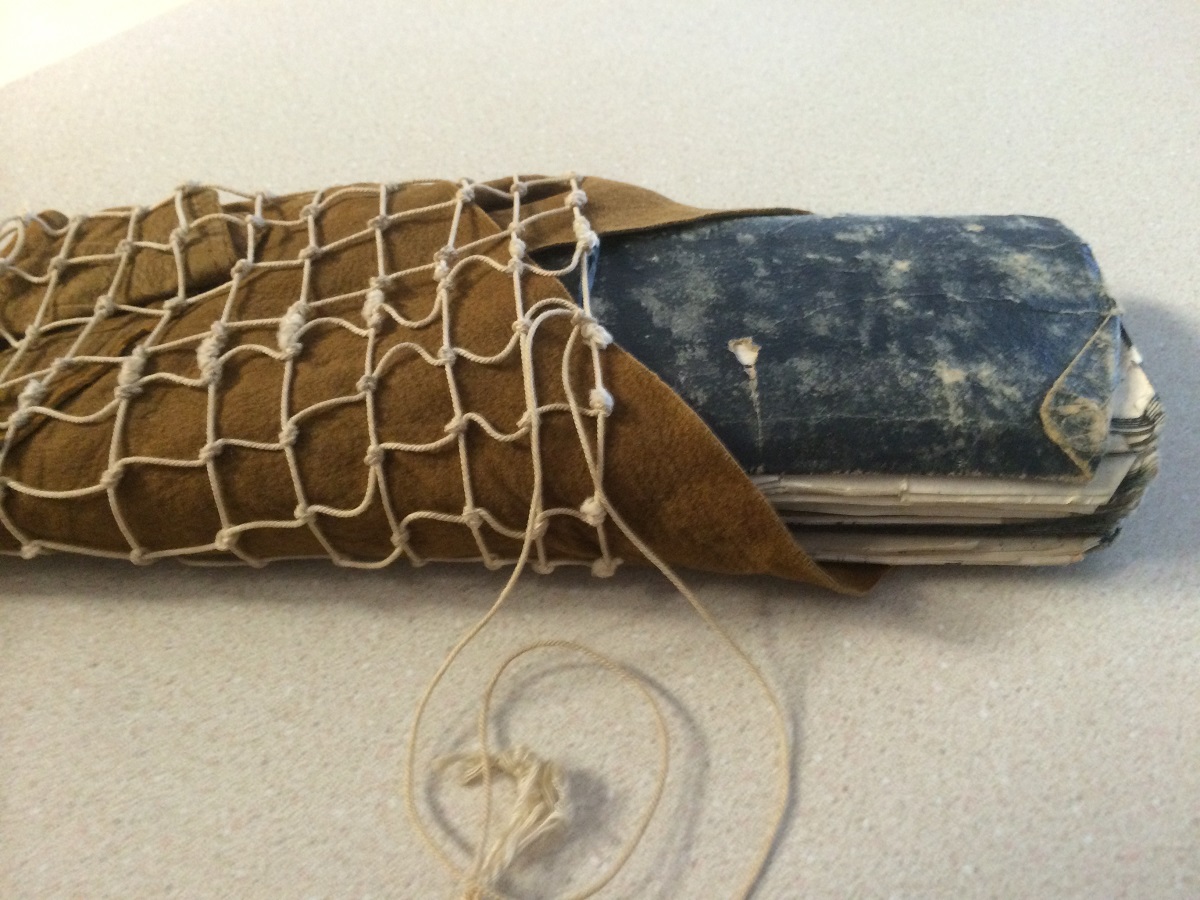
Hubert Hough’s diary from while he was in captivity.
Stout used Hough’s diary from his time in captivity to provide important information for the book.
Hough’s diaries from his time in captivity are now in the possession of the State Library of Iowa, where they are being prepared for digital archiving. They will eventually be available to the general public.
If you want to read the book, contact the Oskaloosa Public Library to reserve it. Their telephone number is 641-673-0441.