Iowa’s New 60 mph Rural Speed Limit Takes Effect, But Drivers Should Watch for Signs
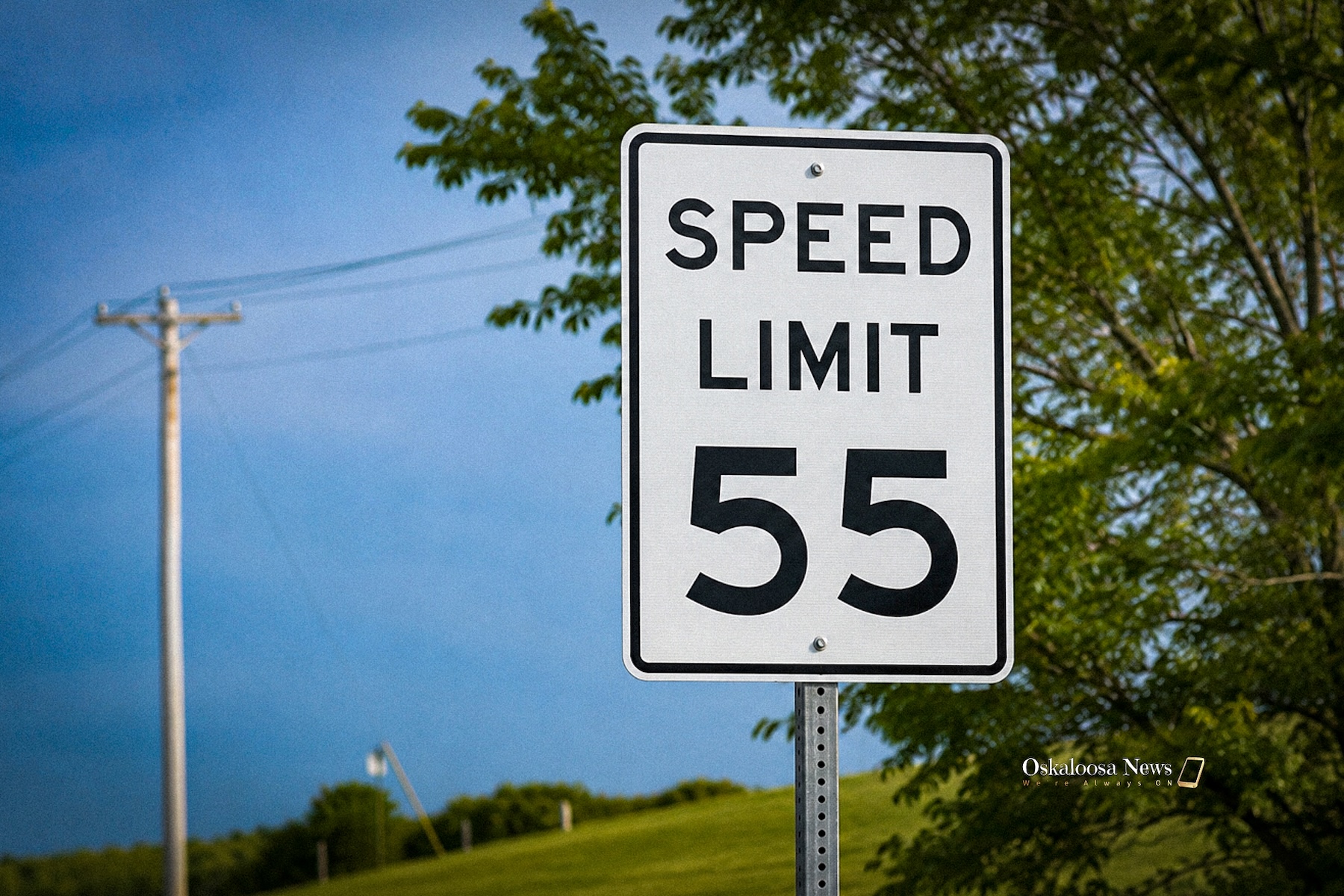
A 55 mph sign remains in place along an Iowa roadway as Iowa road agencies continue reviewing and updating speed limit signs following the state’s move to a 60 mph default speed limit on many rural paved roads.
OSKALOOSA — Iowa drivers are adjusting to a new default speed limit on many rural paved roads after Senate File 378 took effect July 1.
The law raised Iowa’s default speed limit from 55 mph to 60 mph on roads where a different speed limit has not been set. The change mainly affects two-lane paved rural highways and county roads.
However, drivers should not assume every road that once had a 55 mph limit is now 60 mph.
The Iowa Department of Transportation has said some roads will remain at 55 mph because of curves, traffic conditions, crash history, road design or other safety concerns. Drivers should continue following posted speed limit signs as agencies review roads and update signs.
Mahaska County Sheriff Russ Van Renterghem said the new law will take time for drivers, law enforcement and road agencies to adjust to.
Van Renterghem said he is not strongly opposed to raising the limit by five mph, but he questioned whether the increase was necessary. His main concern is the difference in speed between vehicles.
He said drivers who continue traveling 55 mph could be approached quickly by drivers traveling 60 mph or faster. That difference can reduce reaction time, especially on two-lane roads where passing is limited.
Van Renterghem said higher speeds can also lead to more serious damage, injuries and deaths when crashes occur.
He said rural drivers should remain aware of deer, farm machinery, intersections and slower-moving vehicles. He also said some motorists, especially those who have driven 55 mph for decades, may not feel comfortable increasing their speed.
The sheriff said drivers should give themselves extra time to reach work, school or other destinations instead of rushing.
Mahaska County has more than 200 miles of paved county roads. Van Renterghem said changing or reviewing signs across the county will take time.
The new law allows the Iowa DOT, counties and cities to place approved overlays or stickers on existing signs while permanent signs are ordered or installed.
State officials expect to update about 1,800 speed limit signs on Iowa’s primary road system. Counties across Iowa are also responsible for reviewing and changing signs on roads under county control.
The 60 mph change does not apply to every roadway.
Speed limits in towns, residential areas, school zones, construction zones and other specially posted locations remain in place. Interstate highways and divided highways also continue to follow their existing posted limits.
Gravel roads are also not part of the new 60 mph default speed limit. Iowa law continues to set lower limits for unpaved secondary roads unless another limit is posted.
Drivers should continue using caution during the changeover period. A roadway may remain at 55 mph because of safety conditions, or it may be scheduled for a new 60 mph sign.
For motorists, the main message is simple: Watch the signs, allow more time for travel and drive for the road conditions.
Window Tint Law Also Changed July 1
Another transportation-related law that took effect July 1 changes Iowa’s window tint rules.
The new law requires front windshields to allow at least 70% of light to pass through. Front side windows next to the driver and front passenger must allow at least 50% of light to pass through.
The change gives drivers more flexibility for tint on front side windows than the previous law.
Van Renterghem said he supports limits on dark window tint because officers need to be able to see into vehicles during traffic stops, especially at night.
The new speed limit and window tint laws are among several transportation-related changes that took effect in Iowa on July 1.