Clow Valve Highlights Investment and Innovation During Miller-Meeks Visit
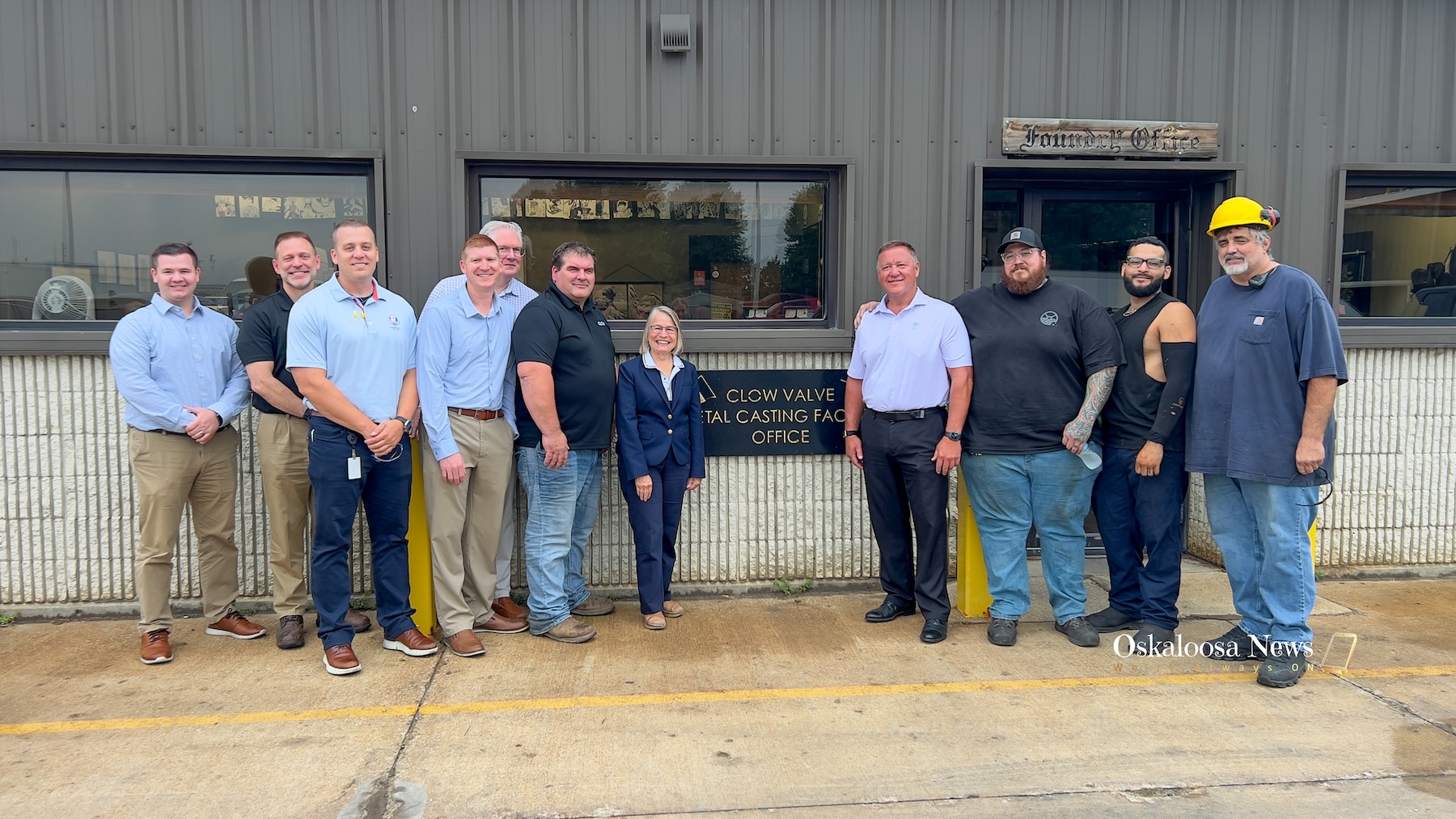
U.S. Rep. Mariannette Miller-Meeks, center, and Clow Valve Vice President and General Manager Mark Willett, standing to the right of the plaque, join Clow Valve team members outside the company’s Metal Casting Facility during Miller-Meeks’ Aug. 6, 2026, visit to Oskaloosa.
Oskaloosa manufacturer discusses American-made products, energy costs, water infrastructure and federal rules
OSKALOOSA, Iowa — Clow Valve highlighted its new technology and significant investment during U.S. Rep. Mariannette Miller-Meeks’ visit, demonstrating how the company is preparing for the future.
Miller-Meeks visited the plant on Thursday, Aug. 6, as part of her second annual Made in America Manufacturing Tour. Clow Valve was one of four manufacturers chosen for the tour.
The visit featured discussions with company leaders and employees. Miller-Meeks toured Clow’s expanded foundry and learned about the fire hydrants, valves, and water system products manufactured in Oskaloosa.
The central question was: What does Clow Valve need to remain competitive in a changing global market?
Clow leaders identified four priorities: support for American-made products, affordable energy, continued investment in water systems, and clear federal regulations.
A major investment in Oskaloosa
Clow Valve has made one of the largest private investments in Oskaloosa’s recent history.
In August 2025, the company opened an $80 million, 36,000-square-foot foundry expansion, replacing decades-old equipment.
The project introduced automated controls, enhanced safety, and made some jobs easier on employees. It also improved environmental performance and nearly doubled the plant’s production capacity.
Oskaloosa News previously highlighted Clow’s significance to the local economy. At the time of the expansion, Clow employed over 450 people, reported an annual payroll exceeding $43 million, and had an annual economic impact exceeding $150 million.
This investment enables Clow to increase production of hydrants and valves while retaining jobs in Oskaloosa.
Miller-Meeks emphasized the importance of plant visits, noting that lawmakers need to understand manufacturing operations and hear directly from employees.
She stated that federal tax policies allowing faster deductions for research and equipment costs can help existing plants expand and encourage companies to return manufacturing to the United States.
Supporting American-made products
Clow leaders emphasized the importance of federal Buy American rules to the company.
Clow manufactures ductile iron valves and hydrants in the United States, which are frequently used in federally funded water projects.
Federal rules require many taxpayer-funded infrastructure projects to use domestically produced iron and steel. Clow leaders noted these rules support American manufacturers, but only if they are enforced.
They expressed concerns about competing products labeled as American-made that may not meet the same standards. Company leaders requested continued enforcement to ensure compliant manufacturers are not disadvantaged.
Energy costs also matter
Producing iron and brass products requires significant energy. Clow leaders noted that energy prices directly impact the cost of each hydrant or valve.
Miller-Meeks stated that American manufacturers cannot compete with overseas companies on wages. Instead, she advocated for supporting quality jobs and helping manufacturers manage controllable costs.
She identified affordable, reliable energy as essential for helping plants like Clow compete globally.
Water systems need continued investment
The discussion also addressed water quality and the condition of water systems nationwide.
Many communities face aging pipes, treatment plants, and sewer systems. Replacing this infrastructure is costly, particularly for smaller towns with fewer customers to share expenses.
Clow leaders stressed the importance of continued funding for water projects, which provide safe water to communities and create demand for American-made valves, hydrants, and equipment.
Miller-Meeks stated she has supported increased funding for state revolving funds, which offer low-cost financing for drinking water and wastewater projects.
She noted that replacing a water treatment plant can be a significant burden for small communities, especially for older residents on fixed incomes who may struggle with higher water bills.
Clow leaders explained that while many water system upgrades yield long-term savings, communities must first secure funding to purchase and install new equipment.
New technology finds water leaks
Clow’s work now extends beyond traditional hydrants and valves.
McWane, Clow Valve’s parent company, launched the iHydrantPlus water system platform in June.
The system collects data from hydrants to help water departments monitor underground networks. It detects possible leaks, tracks water pressure, and monitors temperature.
Computer tools analyze this data and send alerts when unusual changes are detected. This helps cities identify leaks or pressure issues before they escalate.
Early detection can reduce treated water loss and help water departments pinpoint repair locations, avoiding the need to search large areas.
Miller-Meeks described the technology as an example of how to improve familiar products to meet new needs. While fire hydrants last many years, adding monitoring equipment provides cities with valuable information about connected pipes.
Clear rules help companies plan
Clow leaders also discussed their collaboration with the Environmental Protection Agency.
They reported a strong working relationship with the agency, though customers occasionally have questions about complying with new federal requirements.
Clow requested clear, stable rules that remain consistent long enough for manufacturers and water departments to plan projects effectively.
Miller-Meeks stated that Congress must write detailed laws that agencies can implement fairly and clearly. She added that businesses are more likely to comply when requirements are clear and stable.
A local company with a national reach
Founded in 1878, Clow Valve now produces products used in water systems across the United States and internationally.
The company’s ongoing investment demonstrates that traditional manufacturing and new technology can work together. While iron and brass are still poured and shaped in Oskaloosa, the products now help cities collect data, detect leaks, and manage water systems.
For Clow, competitiveness depends on ongoing innovation within the plant and sustained investment in the nation’s water infrastructure. It allowed company employees to explain those needs directly to a member of Congress. It also allowed Clow to show how its Oskaloosa workforce is building products that protect drinking water, support firefighters, and serve communities across the country.