Iowa environmental, ag advocates work to keep water monitoring flowing
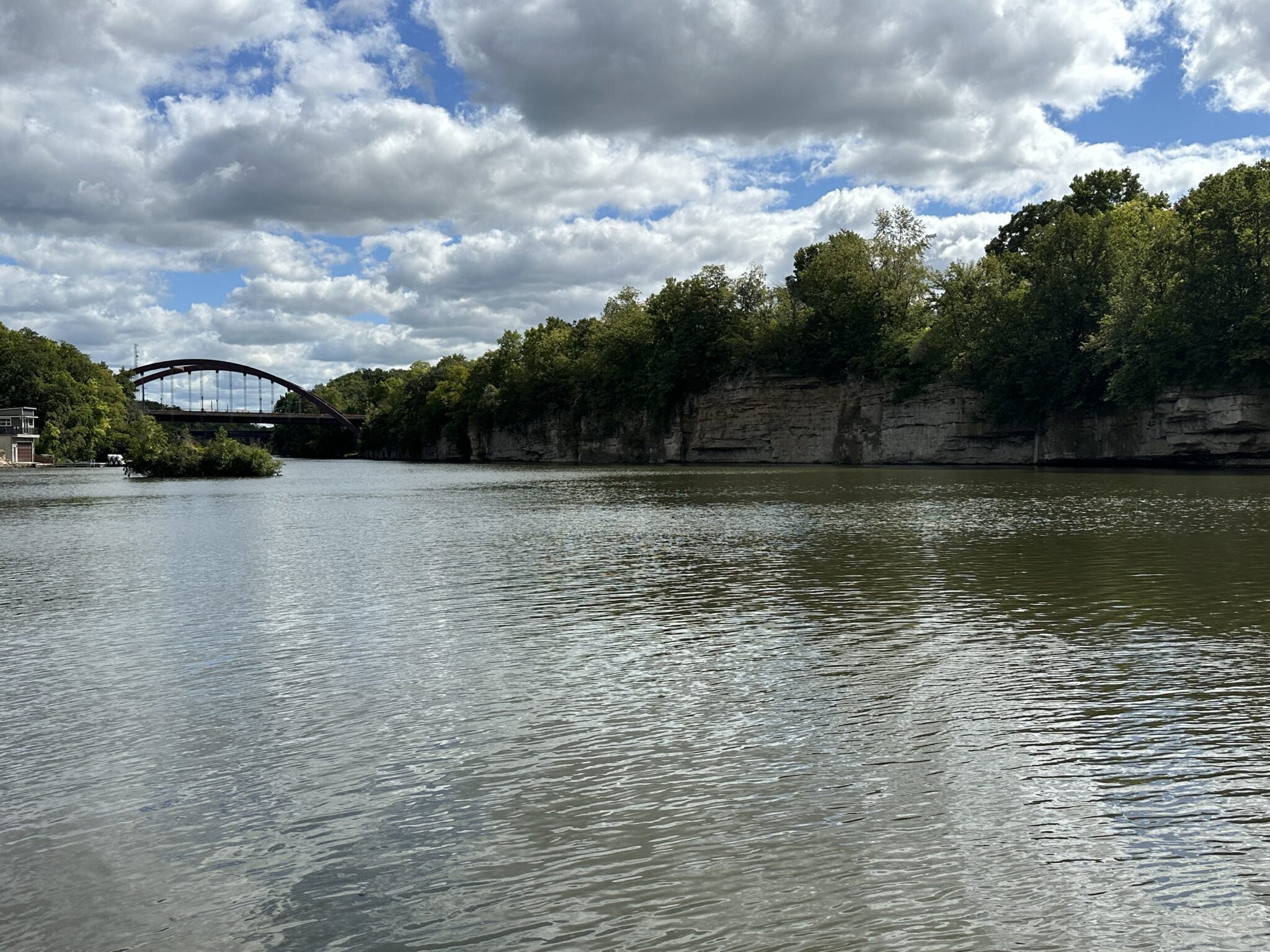
The Iowa Farmers Union heard from Iowa Environmental Council Water Program Director Colleen Fowle Thursday about the state’s water quality monitoring system. (Photo by Cami Koons/Iowa Capital Dispatch)
by Brooklyn Draisey, Iowa Capital Dispatch
March 26, 2026
Agriculture and environmental advocates say now is the “prime time” for Iowans to pressure state lawmakers to fund water quality monitoring that they say is essential for Iowans’ health and well-being.
Iowa Environmental Council Water Program Director Colleen Fowle spoke with members of the Iowa Farmers Union Thursday about the importance of keeping Iowa’s water monitoring system alive and the dangers that could come if that data is no longer collected.
Monitoring aids Iowans, others
The Iowa Water Quality Information System, or IWQIS, provides real-time data on Iowa’s waterways every 15 minutes, including their nitrate levels, discharge rates, dissolved oxygen concentrations and temperature. The University of Iowa IIHR Hydroscience and Engineering department runs the program, using sensors it owns and ones from the United States Geographical Survey and U.S. Department of Agriculture.
Traditionally supported with state appropriations that began in 2013, the Iowa Legislature in 2023 passed legislation diverting funding away from the monitoring system. While the Walton Family Foundation provided funds to keep the system alive, that money will run out this summer, and advocates for the system have been working to find solutions to keep it running.
“If we don’t know what the conditions are, we won’t be able to address them,” Fowle said. “And so what we are asking for, for the Legislature to reappropriate during this process is $600,000 in annual funding to IIHR to support the network, but then also additionally a $500,000 one-time payment to replace their outdated infrastructure.”
IIHR operates 52 sensors across the state, Fowle said, alongside 10 from the geographical survey and eight from the USDA. The data is used in Iowa as well as by researchers and officials downstream of Iowa waterways, all the way down to the Gulf of Mexico to track what nutrients make their way down the Mississippi River from Iowa land.
In Iowa, Fowle said, only 4% of public water suppliers are able to remove nitrate from the water, leaving 80% of Iowans drinking water from stations that must blend together water from different sources to reduce the nitrate in their finished product. If the system goes down, those water stations would have no warning as to the nitrate levels coming their way and would have to scramble to make the water safer.
If the project does see its funding end this summer, Fowle said it won’t just be the UI sensor data Iowans are losing but USDA data as well, as it isn’t publicly accessible outside of IWQIS. The collection of long-term data would also be interrupted, impacting future study of Iowa’s water.
“What this IWQIS site does is it combines all of the information from these sensors onto one site, and if the site isn’t there anymore, the public or these water suppliers won’t be able to get that real-time, publicly accessible information that they need to operate their systems,” Fowle said.
The monitoring system originally received $500,000 in annual funding from the state, Fowle said, and the request for this year was increased due to inflation.
Working to keep the system alive
Polk County last year committed $200,000 to the monitoring system, set to kick in once the foundation funding ends, and a GoFundMe set up by the Iowa division of the Izaak Walton League of America has raised nearly $65,000. Johnson County has also committed $50,000 to the cause, the GoFundMe stated.
Efforts have also been made by health care and environmental advocates and other Iowans this legislative session to urge lawmakers to fund water monitoring. Legislation to provide funding was introduced but failed to move ahead. However, since this is an issue of appropriations, Fowle said “now is the time” to voice the issue while lawmakers decide on budget items for the state to fund.
One point Fowle said she’s heard from lawmakers is that there are other water monitoring systems in place in Iowa, so the IIHR system could be duplicative to something like the Iowa Department of Natural Resources’ ambient water quality monitoring network, for example. But those samples are only taken once a month, Fowle said, and would not be “adequate” for the threatened system’s other uses.
“You don’t want to make the investment in a conservation practice if it isn’t effectively reducing nitrate, so there’s a lot of work we can do with using these sensors in order to better place conservation practices and using hydrologic modeling in order to determine where conservation practices might have the most effect in reducing nitrate,” Fowle said. “But all of those rely on calibration data points that this network provides.”
Groups including the Iowa Cancer Registry, Harkin Institute for Public Policy and Citizen Engagement and the Iowa Environmental Council have spoken about the importance of monitoring Iowa’s waters to maintain valuable information relating to risk of developing cancer or other illnesses. A report released by the Harkin Institute and environmental council recommends increasing water quality monitoring and further transparency of the data.
Aaron Lehman, president of the Iowa Farmers Union, agreed with Fowle’s point that now is the best time to bring up the monitoring system with lawmakers. He said there are “some voices in the broader ag community” that have publicly expressed their lack of appreciation for the monitoring system, but he and others who advocate for its support are “not afraid” of what the sensors may show and what improvements they might point toward for farmers.
“We want to be part of that solution, and we need to be part of that solution moving forward,” Lehman said. “So it’s so important for this monitoring system to move ahead now.”
Iowa Capital Dispatch is part of States Newsroom, a nonprofit news network supported by grants and a coalition of donors as a 501c(3) public charity. Iowa Capital Dispatch maintains editorial independence. Contact Editor Kathie Obradovich for questions: info@iowacapitaldispatch.com.