Vander Linden Update for February 8, 2013
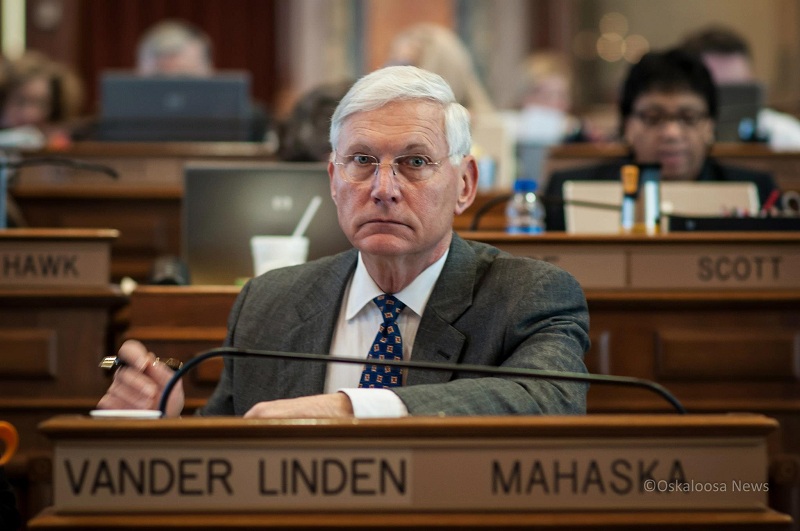
Rep. Guy Vander Linden (R)
Work Begins on Expenditure Limitation Constitutional Amendment
Subcommittee meetings have begun on HJR 2, the constitutional amendments to limit state spending to 99 percent of on-going revenue. HJR 5 would place two amendments on the ballot for Iowa voters regarding the Legislature’s power to tax and spend.
The first amendment limits the size of the annual state budget to 99 percent of the Revenue Estimating Conference’s December estimate of ongoing revenue. Any ending balance puts into the Taxpayers Trust Fund, so they can be returned to Iowans. The amendment also requires any bonding approved by the Legislature to receive a two-third’s vote of both houses.
The second amendment requires the Legislature to approve any tax increase by a 60 percent vote of each house. Passing the amendment makes it harder for the Legislature to raise taxes or issue bonds, and it prevents the Legislature from “notwithstanding” current law so they can spend more money than the state has.
Some under the golden dome would like to rewrite history and portray 2007-2010 as a time of fiscal discipline. But Iowans know from those tough times that their elected officials can get the state into money trouble when they have ways to spend more than what is taken in. Adoption of these amendments brings real fiscal discipline to state government and helps protect the family budget.
Mental Health Transition Fund Bill Starts Moving
The House Appropriations Committee commenced this year’s efforts on mental health redesign with consideration of a bill providing transition funds to a number of Iowa counties. The bill is likely to be the first of a series of proposals continuing the efforts to bring Iowa’s mental health system into the 21st century.
When the Legislature passed mental health redesign in the last session, there was an understanding that some counties may have trouble in Fiscal Year 2013 paying for non-Medicaid services. The bill moved responsibility and funding for the Medicaid services to the state, which meant counties did not have those funds to help cover the non-Medicaid services.
A substantial amount of time and effort was made by legislators and staff to identify an amount that counties would need during the one-year transition to the new system. But, they were unable to come up with a reliable number. Instead of appropriating an amount of funds without confidence that it was the right amount, legislative leadership committed to a process to identify the number during the interim.
The Mental Health Redesign bill (SF 2315) created a transition fund process for FY 2013. Counties that faced funding shortfalls in FY 13 due to the state assuming responsibility for the Medicaid costs applied this fall to the Department of Human Services (DHS) for additional funding to serve as a bridge to the new system in FY 2014. Thirty-two counties applied to the Department for funds. DHS issued a report in December that gave the Legislature three scenarios for possible funding.
The first option would provide $11.6 million to 26 counties who faced having a negative mental health fund balance at the end of FY 2013. Option 2 would provide $3.8 million to 14 counties that would have a negative fund balance and no ability to pay what was owed for unpaid bills. And option 3 would provide $1.4 million to just three counties to pay for non-Medicaid services that could not be funded this year.
After significant discussion, the decision was reached by leadership of the House and Senate to go with the first option. By providing this level of funding will allow a number of counties to start in the redesigned system with no outstanding bills.
As a condition of receiving these funds, the qualifying counties have to pay off their outstanding Medicaid bills by the end of FY 2013. Since the counties would be receiving funds that have federal restrictions on their use, counties would be required to comply with any audit requirements. For the counties that applied but didn’t qualify or didn’t apply at all, they can pay their Medicaid bills by the end of FY 2013 or enter into a payment plan with DHS to clear the books by the end of FY 2014.
More Governors Pushing Tax Reform
Currently nine states have no income state tax; Alaska, Florida, Nevada, South Dakota, Texas, Washington, New Hampshire, Wyoming and Tennessee. Now other states are moving ahead with tax reforms of their own.
Nebraska Governor Dave Heineman has proposed eliminating the income tax for the Cornhusker state, while Oklahoma and Kansas have lowered income tax rates the last two years, with the stated goal of eliminating them altogether.
In addition, the Governor or North Carolina, Pat McCrory wants to reduce income taxes, while Indiana Governor Mike Pence has called for a 10% income tax rate cut. Not to be out done, Susana Martinez, New Mexico’s Republican Governor has called for corporate income tax reform in her state. And finally, Louisiana Governor Bobby Jindal wants to eliminate both the personal and corporate income tax and replace it by raising the state’s sales tax.
A recent analysis by economist Art Laffer for the American Legislative Exchange Council finds that from 2002-2012, 62% of the three million net new jobs in America were created in nine states without an income tax. Six of those states (TX, FL, SD, TN, NV & WY) also happen to be Right to Work states as well. No income tax states also show more stable revenue growth versus the wild swings some coastal states exhibit.
M
eanwhile, our neighbors to the north and east (Minnesota and Illinois) have Governors that are proposing massive new tax hikes, or recently just implemented them, yet still face daunting budget and pension obstacles ahead.
While tax reform has stalled at the national level, it’s encouraging to see so many reform minded Governors or Republican led Legislatures (like us here in Iowa) pushing tax reform as sound public policy.