Senate passes bill allowing Iowa historical research center closure
Senate passes bill allowing Iowa historical research center closure
by Robin Opsahl, Iowa Capital Dispatch
March 4, 2026
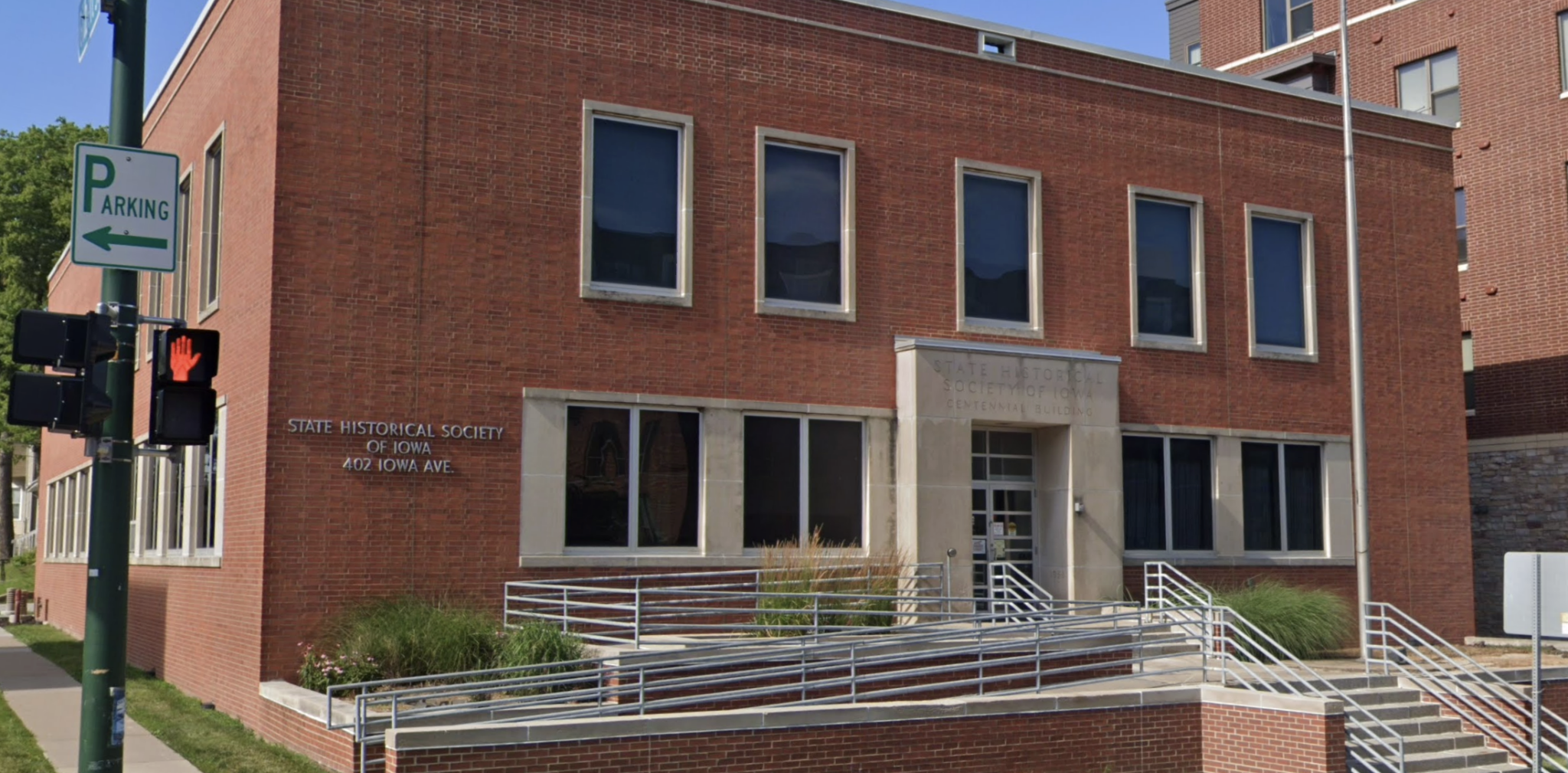
The Senate passed a measure Wednesday allowing the state to close the State Historical Society of Iowa Research Center, an action the Iowa Department of Administrative Services has already taken despite Iowa Code requiring the state to maintain an Iowa City historical center.
Senate File 2293, passed 28-17, would remove the requirement in state law for the DAS to maintain a historical resource research center in Iowa City, stating only a Des Moines facility must be maintained.
Sen. Carrie Koelker, R-Dyersville, the bill’s floor manager, said the center, which has been operating since 1957, “has become a little bit disorganized, and the building is also in need of some major repairs.” She said the building needs new HVAC plumbing, roofing and electrical systems, and requires a new elevator, external stairs and accessibility ramps, in addition to costing the state between $150,000 to $250,000 each year for utilities.
She said the Iowa City center currently sees roughly 800 visits annually, “which many of them are repeat visits,” and that the building is currently staffed only by volunteers. The provision would save taxpayer funds by not requiring this building to be maintained, she said, while ensuring historical collections are maintained at the Des Moines facility.
“It’s state funds — not county, and there’s no private-public partnership — it’s all on the taxpayers of Iowa to be footing this bill for the upcoming repairs of this non-private-public partnership for (800) visits a year,” Koelker said. “So change is hard, technology is enhanced, history is saved and (so is) a whole lot of … taxpayer dollars.”
The measure comes after the State Historical Society of Iowa Research Center in Iowa City has closed its doors. While DAS announced the planned June 30, 2026 closure of the center in June 2025, the location closed beginning Jan. 1 after the state reached an agreement with the University of Iowa to keep some records accessible. That agreement followed a lawsuit brought by a group of historians, professors, archivists and donors who challenged the DAS decision to close the Iowa City facility.
The lawsuit specifically pointed to the language in Iowa Code requiring the state to maintain the Iowa City research center. This is the language that would be changed by the bill moved forward Wednesday, which would be “effective upon enactment.”
Multiple Democratic senators spoke against the measure during debate. Sen. Art Staed, D-Cedar Rapids, disputed many of the arguments made by Koelker and other supporters of the legislation about problems with the building, saying issues with the elevator or asbestos were “unsupported,” and that claims that the Iowa City collections are disorganized or underutilized are not true.
“About the maintenance, the maintenance required for the centennial building is modest compared to the approximately $75 million in deferred maintenance reported for the Des Moines Historical Building,” Staed said. “Closing Iowa City does not eliminate costs, it shifts them to (a) facility already facing significant infrastructure challenges including water intrusion, risks that are particularly dangerous for archival materials.”
According to the lawsuit, the State Historical Building in Des Moines has $72 million in deferred maintenance projects, and “lacks sufficient climate-controlled space to house the Iowa City collections.”
Additionally, Staed brought up comments made at a June board meeting by Iowa State Archivist Tony Jahn, who said 40% of the Iowa City collections will be transferred to the Des Moines State Historical Building while the other 60% would be privatized, divided up or discarded.
“Turning the state-held historical assets to private vendors is not a responsible solution,” Staed said. “Such actions require rigorous, long-term scrutiny and the highest preservation standards. In conclusion, closing the Iowa City Research Center will not save the state money. It will endanger irreplaceable materials, reduce public access, eliminate professional expertise, and transfer collections to a facility with significantly deferred maintenance challenges.”
Koelker said the bill will not allow any historical materials currently at the Iowa City center to be discarded.
“All the items from Iowa City Center will be rehomed,” Koelker said. “None of them are gonna be thrown away. They’re all gonna be rehomed to an appropriate local historical institution, or transferred to the state archives in Des Moines. Items in the collection will be preserved and handled in accordance with state and national historical collection standards. It’s our statutory obligation. Items will not, and cannot, be simply discarded or thrown out.”
While the measure passed the Senate, it is unclear whether there is sufficient support in the House to move forward. In January, a bipartisan group of House legislators — Reps. Adam Zabner, Bobby Kaufmann, Charley Thomson and Dave Jacoby — introduced House File 2025, which would require DAS to maintain both Iowa City and Des Moines facilities, in addition to stipulating these locations must be “adequately staffed” and “open to the public.”
The House proposal did not receive a subcommittee hearing, and did not advance past the first “funnel” deadline.
Iowa Capital Dispatch is part of States Newsroom, a nonprofit news network supported by grants and a coalition of donors as a 501c(3) public charity. Iowa Capital Dispatch maintains editorial independence. Contact Editor Kathie Obradovich for questions: info@iowacapitaldispatch.com.