A Veterans Day Thank You to My Dad, and All Who Have Served
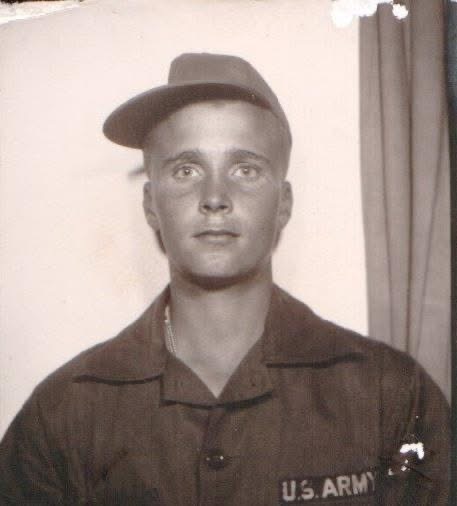
A young Kenneth Mortensen, beginning his service in Vietnam in 1968.
I don’t often use this platform to share my personal thoughts and/or feelings, but today is going to be one of those rare exceptions.
The young guy in that picture is my dad, Kenneth.
The year was 1967. He was 18 and about to be in Vietnam (thousands of miles from home) in a country at war. He ended up there after visiting a recruiting office in Iowa City.
At a time when most of the young folk were thinking about cars, girls, and what they were going to do with their lives, my dad was walking straight into one of the most difficult and contentious wars in American history.
He served at a base camp just outside of Pleiku, South Vietnam, in 1967 and 1968.
To grasp what that meant, you had to understand what was going on in the world at that time.
Pleiku was in the Central Highlands of Vietnam and was of immense military significance. Its roads, airfields, and installations were all vital to the American and South Vietnamese forces. Some of the lasting tactics used today were invented by the men serving in that theater of war, including what became known as gun trucks. Those tactics and the evolution of those vehicles play a major role in today’s military.
In 1967, the US troops were up against the North Vietnamese in the highlands around them.
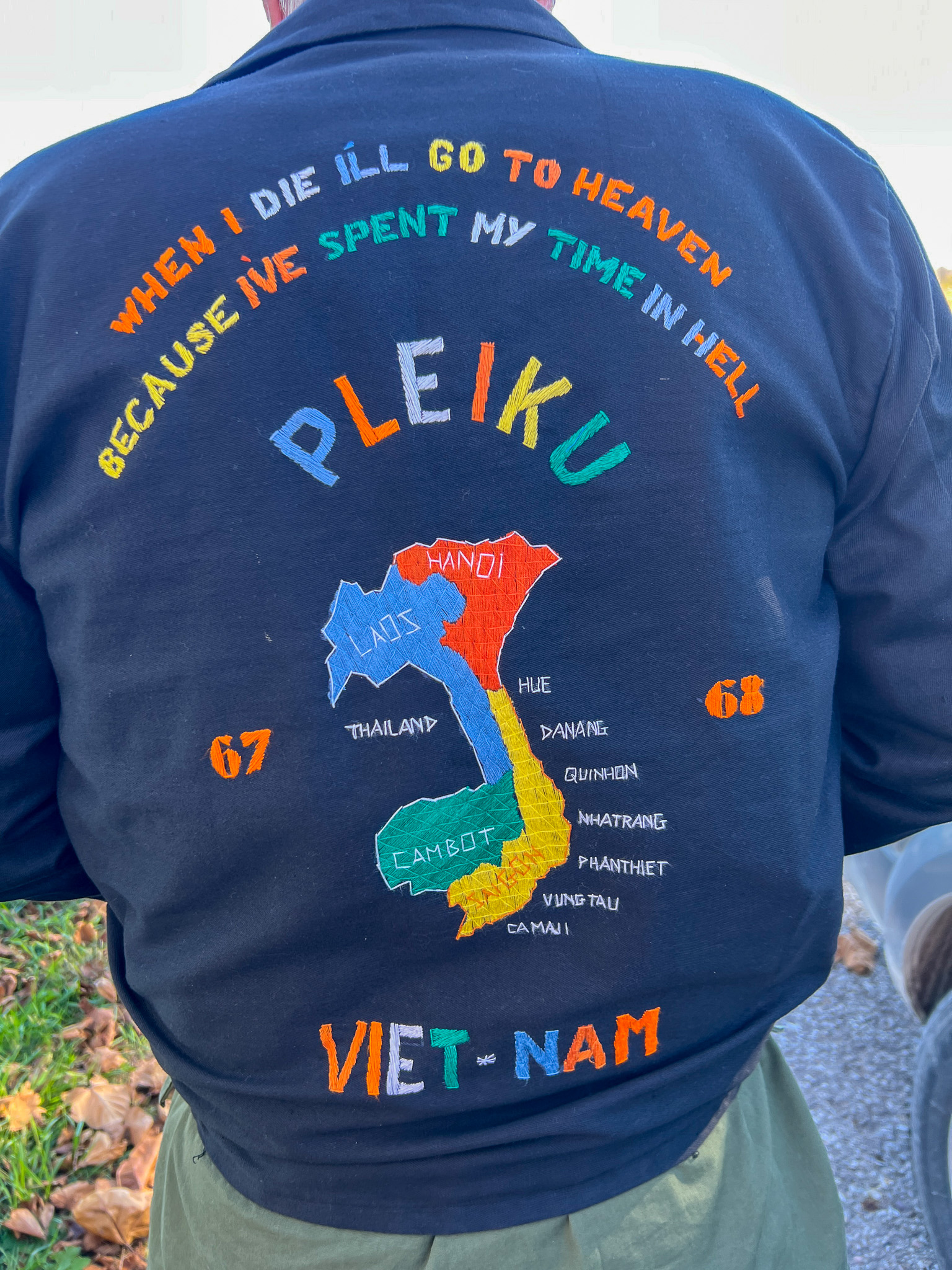
The back of the jacket Dad bought commemorating his time in Pleiku.
Then came January 1968.
The Tet Offensive was launched by the NVA and VC with a series of coordinated attacks across South Vietnam. Pleiku was attacked on the 30th of January, and US and ARVN forces were engaged in the fighting to retake the city.
This wasn’t some conflict in some distant part of the world that Dad was reading about in the paper. This was the part of the world he was actually stationed in. His life was saved by another quick-thinking soldier who pulled Dad to safety as a mortar round exploded.
Meanwhile, back home in America, it was all but split.
Johnson was President of a country that was increasingly skeptical of the war in Vietnam. The anti-war demonstrations were growing all the time, families were being torn apart, and the American public was just plain confused as to what victory would even look like.
The war was also part of the much bigger picture of the Cold War.
The US was attempting to contain the spread of communism; the USSR and China were backing North Vietnam. The US leadership was deeply concerned about the effect of a loss in South Vietnam on the rest of SE Asia.
These were decisions being taken by the Presidents, the Generals, the Diplomats and the World Leaders.
But the job of implementing those decisions was on people like my dad.
Young men (many of them barely old enough to vote) who were sent halfway round the world to serve their country.
And for my dad, his service in the military didn’t end when he came back from Vietnam.
He went on to serve in the Iowa National Guard and eventually completed 20 years in the military, after which he retired.
During his service in the Iowa National Guard, he was also deployed to Germany in the 1980s, with the Cold War still very much on.
Germany was of course split into East and West. The Berlin Wall was the most visible manifestation of that split, and US troops based or deployed in West Germany were part of the NATO force, designed to defend against a Soviet-led invasion.
In that decade, there was a very high level of tension between the US and the USSR, most notably the nuclear arms race with respect to missiles in Europe.
Vietnam was a war fought in the jungles and highlands of SE Asia. The mission in Germany was different, though. The US military was there to prevent another war of that scale.
It was a reminder that military service doesn’t necessarily mean you’re going to be in a war. It can just as easily mean you’re going to be ready for a war, with the hope that that readiness will in itself help to maintain the peace.
When I look at that photo today, I don’t just see an 18-year-old kid going off to Vietnam.
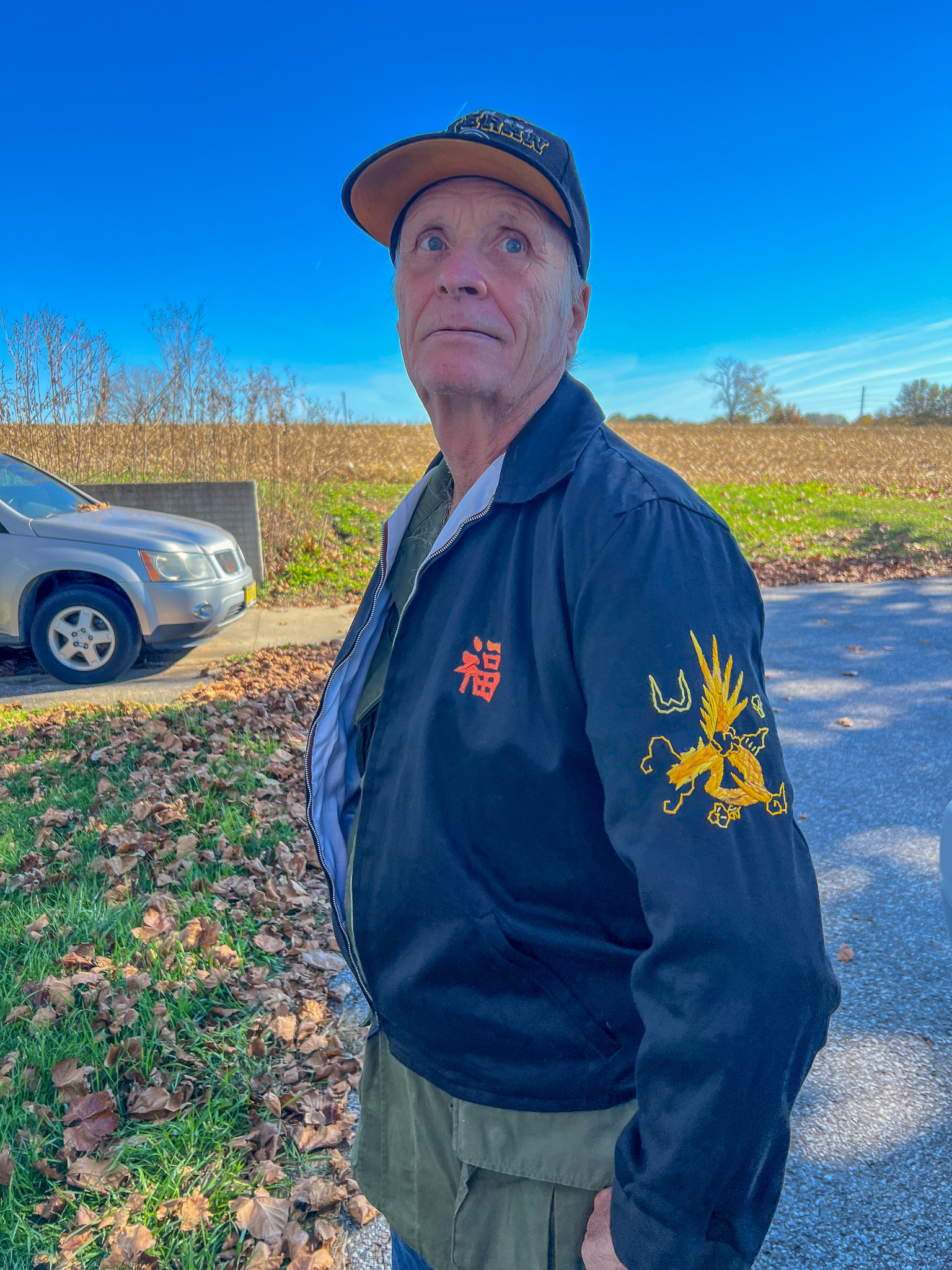
My Dad in his Pleiku jacket, taken in November 2026.
I see my dad.
I know someone who gave 20 years of his life to the military, during a period when our country and the world were going through extraordinary changes.
I also think about the millions of other American men and women who have served.
Those who went to Vietnam and never came home.
Those who came back with the memories and the experiences (the rest of us will never truly understand those).
Those who served during the Cold War, on watch for decades when the threat of a much bigger war was always there.
Those who fought in WWII, Korea, the Gulf, Iraq, Afghanistan, and all manner of other places, we remember you as well.
And those serving today who continue to take on the responsibilities and make the sacrifices that the vast majority of us will never be asked to make.
I think about their families as well. The parents, the spouses, the children, the people who were at home waiting for them, myself included, who were concerned about them, who made the same sacrifices.
We can argue about the wars we’ve fought. We can question the political decisions that have seen our troops sent into harm’s way. History has proved just how important those questions can be.
But we must never lose sight of the people who answered the call to serve.
Dad, I’m grateful you’re still here.
I’m very grateful for your 20 years of service, for what you’ve sacrificed, and for the life you’ve lived since that photograph was taken some 60 years ago.
I probably don’t tell you that enough: how much I appreciate you, how proud I am to be your son.
Today seems like a pretty good day to say it.
Thank you, Dad.
And to every veteran, past and present, thank you for your service, your sacrifice, and your willingness to do something bigger than yourself.
To those who never made it back home, we remember you.
To those of you still with us, thank you.
Happy Veterans Day.
And Dad, I’m glad that 18-year-old lad in that photograph made it home. I love you.